
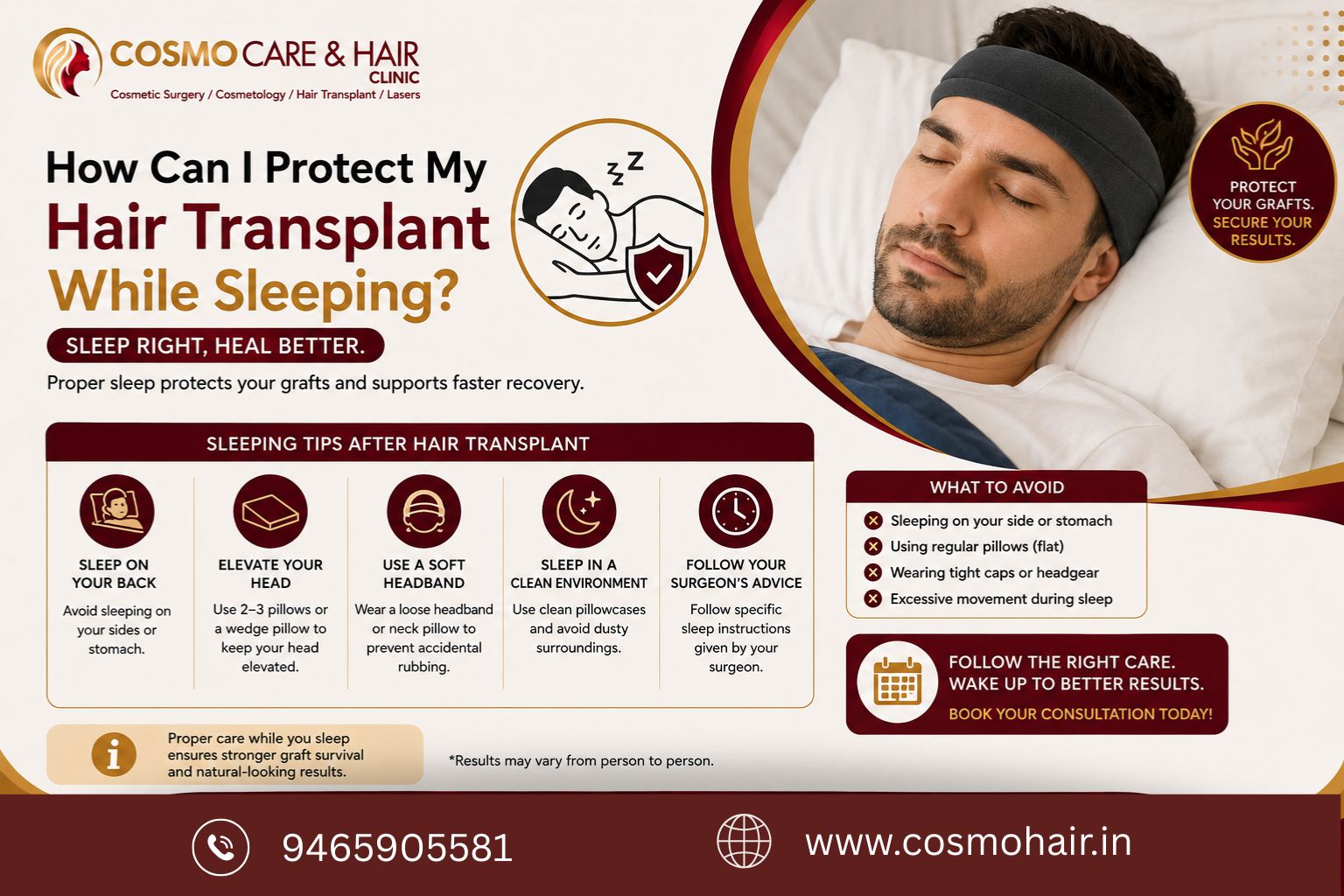
A successful hair transplant is only the beginning of your hair restoration journey. One of the most important parts of recovery happens while you sleep. During the first few weeks after surgery, the newly transplanted grafts are delicate and need proper care. Understanding how to protect my hair transplant while sleeping can help prevent damage, reduce swelling, and support healthy hair growth.
Why Proper Sleep Care Matters After Hair Transplant?
The first few days following a hair transplant are crucial because the grafts are still settling into their new location. Any unnecessary pressure, rubbing, or accidental contact during sleep can affect the healing process. Protecting your scalp while resting allows the transplanted follicles to remain secure and encourages faster recovery. Following the right sleeping techniques can also minimize discomfort and help you achieve the best possible results.
Best Sleeping Position to Protect Hair Grafts
Sleeping in the correct position is one of the most effective ways to protect your newly transplanted hair. Most specialists recommend sleeping on your back with your head elevated at an angle of around 30 to 45 degrees. This position helps reduce swelling and prevents direct contact between the transplanted area and your pillow.
Using a recliner chair or stacking extra pillows behind your back can make it easier to maintain the recommended sleeping posture. Avoid sleeping on your stomach or sides during the early recovery period, as these positions may put pressure on the grafts and increase the risk of irritation.
How Head Elevation Supports Faster Recovery?
Keeping your head elevated while sleeping helps improve blood circulation and reduces fluid accumulation around the forehead and eyes. Swelling is a common side effect after a hair transplant, but proper elevation can significantly minimize it.
Many patients find that a travel neck pillow provides additional support and prevents unwanted movement during sleep. Maintaining elevation for the first seven to ten days can contribute to a smoother healing process and greater comfort.
Choosing the Right Pillow for Hair Transplant Protection
The type of pillow you use can make a significant difference during recovery. Soft, clean pillows with fresh pillowcases help create a hygienic environment and reduce the chance of infection. A neck pillow can help keep your head stable and prevent accidental rolling during sleep.
Changing pillow covers regularly is equally important. Clean bedding reduces exposure to dust, bacteria, and other contaminants that could interfere with healing. Keeping your sleeping area clean supports both scalp health and overall recovery.
How Long Should You Follow Special Sleeping Rules?
Most hair transplant surgeons recommend following specific sleeping precautions for at least seven to fourteen days after the procedure. During this period, the grafts gradually become more secure, reducing the risk of accidental displacement.
The exact recovery timeline can vary depending on the individual and the technique used. Since every hair transplant procedure is different, following the recovery guidelines recommended by your hair restoration specialist is essential for the best healing outcome. At Cosmo Care & Hair Clinic, patients receive detailed aftercare guidance to ensure optimal healing and long-lasting results.
Avoid Touching or Scratching the Transplanted Area
It is common to experience mild itching as the scalp heals. However, scratching or rubbing the transplanted area while sleeping can damage grafts and slow recovery. If itching becomes uncomfortable, consult your surgeon about approved products or methods to relieve irritation.
Keeping fingernails trimmed and maintaining a comfortable room temperature can also help hair transplants reduce the urge to scratch. Protecting the scalp from unnecessary contact remains one of the most important recovery practices.
Creating a Safe Sleeping Environment After Surgery
A clean and comfortable sleeping environment can improve recovery and help protect your hair transplant. Remove unnecessary pillows, blankets, or objects that could accidentally come into contact with your scalp during sleep.
Many patients benefit from sleeping alone for the first few nights after surgery to avoid accidental bumps or pressure from a partner. Ensuring a calm, organized sleeping space can help you rest comfortably and protect the healing grafts.
Common Sleeping Mistakes That Can Harm Hair Transplants
Several common mistakes can interfere with successful healing after a hair transplant. Sleeping flat on your back without elevation may increase swelling. Rolling onto your stomach or side can place pressure on grafts and potentially affect their survival.
Using dirty pillowcases, scratching the scalp, or failing to follow post-operative instructions may also increase complications. Being mindful of these habits during the recovery period can help preserve your results and support healthy hair growth.
When You Can Return to Normal Sleeping Habits?
Most patients can gradually return to their regular sleeping positions after two weeks, depending on their healing progress. By this stage, the grafts are generally more secure and less vulnerable to displacement. However, every patient heals differently, so it is important to follow your surgeon’s recommendations.
If you have concerns about your recovery or experience unusual discomfort, seeking professional advice can help ensure everything is progressing as expected. Experienced specialists at Cosmo Care & Hair Clinic can provide guidance throughout every stage of your recovery journey.
Final Thoughts
Understanding how to protect your hair transplant while sleeping is essential for achieving the best possible outcome. Simple precautions such as sleeping with your head elevated, avoiding pressure on the grafts, using clean bedding, and following professional aftercare instructions can make a significant difference in your recovery.
By prioritizing proper sleep habits during the healing period, you can support healthy graft survival, minimize complications, and enjoy the long-term benefits of your hair transplant procedure.
Frequently Asked Questions
1. How many days should I sleep with my head elevated after a hair transplant?
Most surgeons recommend sleeping with your head elevated for seven to ten days after the procedure to reduce swelling and protect the newly transplanted grafts.
2. Can I sleep on my side after a hair transplant?
It is generally advised to avoid sleeping on your side for at least the first week because side sleeping can place pressure on the transplanted area.
3. What happens if I accidentally touch my grafts while sleeping?
A minor touch may not cause damage, but repeated rubbing or significant pressure could affect graft survival. Following recommended sleeping precautions helps reduce this risk.
4. Is a travel pillow helpful after a hair transplant?
Yes, a travel neck pillow can help keep your head stable, maintain elevation, and prevent accidental movement during sleep.
5. When are hair transplant grafts fully secure?
Most grafts become significantly more secure within ten to fourteen days after surgery, although complete healing continues for several weeks.