
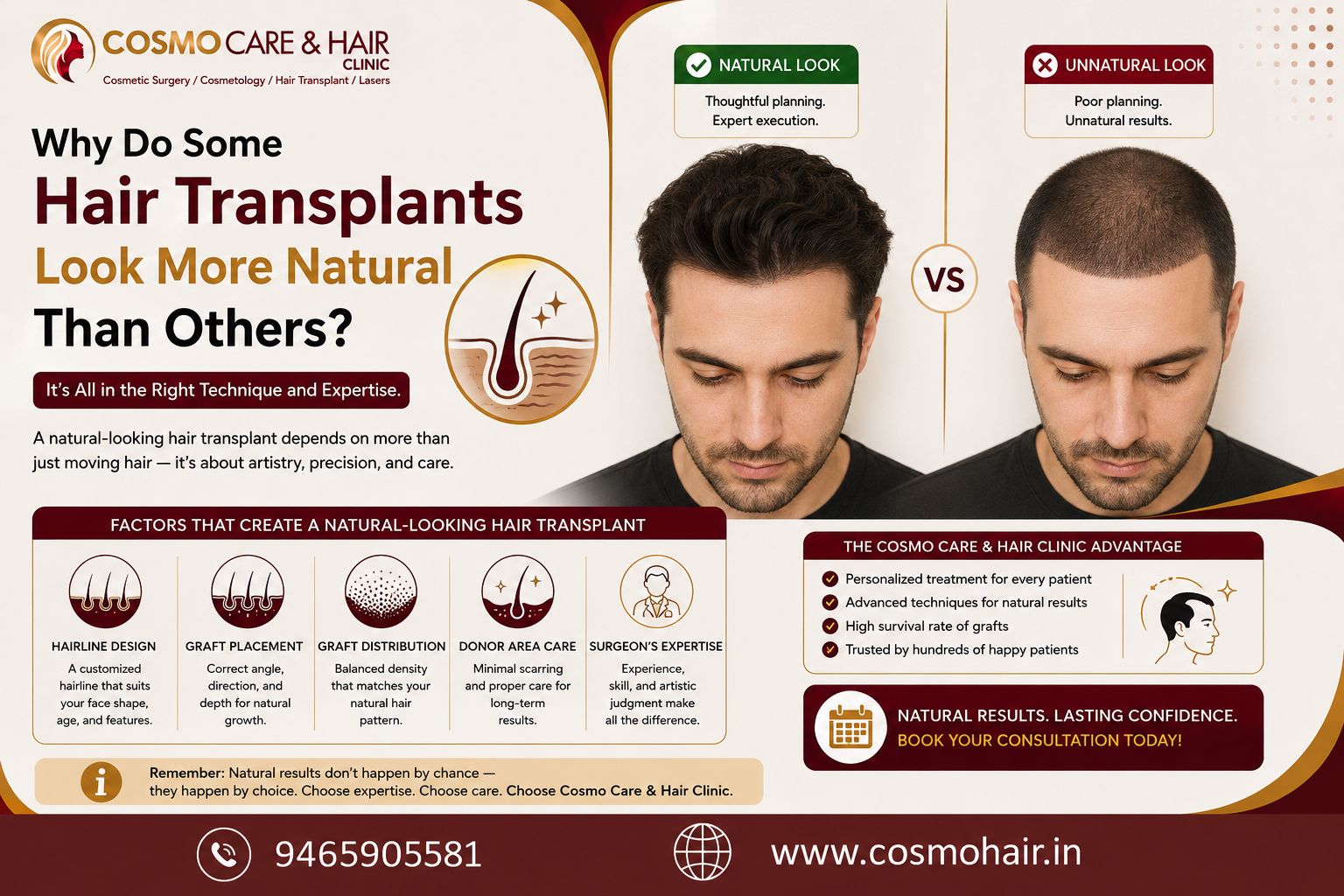
Hair loss can affect confidence and self-image, leading many people to consider Hair Transplants as a long-term solution. However, not all results look the same. While some individuals achieve a natural, undetectable appearance, others may end up with results that appear artificial or uneven. Understanding what makes a hair transplant look natural can help you make informed decisions and achieve the best possible outcome.
Understanding the Science Behind Natural Hair Growth
A natural-looking hair transplant is designed to mimic the way hair naturally grows on the scalp. Every person has a unique hairline, hair density, growth pattern, and follicle angle. Experienced surgeons carefully study these characteristics before planning the procedure. The goal is not simply to add hair but to recreate a realistic appearance that blends seamlessly with existing hair.
Modern hair restoration techniques have significantly improved over the years, allowing specialists to produce results that are virtually impossible to distinguish from natural hair growth.
Why Hairline Design Plays a Critical Role?
One of the biggest factors that determine whether a transplant looks natural is the hairline design. An unnatural hairline is often the first sign of a poorly planned procedure. The ideal hairline should complement the patient’s facial structure, age, and future hair loss pattern.
A skilled surgeon avoids creating a perfectly straight or overly low hairline. Instead, subtle irregularities are introduced to replicate natural hair growth. This attention to detail helps ensure that the final outcome appears authentic from every angle.
Advanced Hair Transplants Use Individual Follicles
Older transplant methods often involved large grafts that created a “pluggy” appearance. Today, advanced Hair Transplants focus on transplanting individual follicular units. These naturally occurring groups of one to four hairs allow for a much softer and realistic look.
Single-hair grafts are typically placed at the front of the hairline, while multi-hair grafts are positioned behind them to create density. This strategic placement closely resembles natural hair growth and contributes significantly to a natural result.
Importance of Hair Density and Graft Placement
Natural-looking results depend heavily on proper graft distribution. Simply transplanting a large number of grafts does not guarantee success. The placement, spacing, and angle of each follicle are equally important.
When grafts are inserted at the correct angle and direction, the transplanted hair grows naturally and blends with surrounding hair. Poorly placed grafts may grow in unnatural directions, making the transplant noticeable.
Experienced clinics prioritize artistic planning alongside medical expertise to achieve balanced density without creating an artificial appearance.
How Surgeon Experience Influences Results?
The expertise of the surgeon is one of the most important factors in determining transplant success. Hair restoration combines science and artistry, requiring careful planning and precise execution.
An experienced specialist understands how to evaluate donor hair quality, design a natural hairline, and place grafts accurately. At Cosmo Care & Hair Clinic, personalized treatment planning helps ensure that every procedure is tailored to the individual’s hair characteristics and aesthetic goals.
Choosing a qualified professional significantly increases the likelihood of achieving natural and long-lasting results.
Donor Hair Quality Affects Natural Appearance
The donor area, usually located at the back and sides of the scalp, provides the hair follicles used during transplantation. The quality, thickness, color, and texture of donor hair influence the final appearance.
Patients with strong donor hair often achieve better coverage and density. Additionally, matching the characteristics of transplanted hair with existing hair helps create a seamless and natural blend.
A comprehensive consultation can help determine whether a patient has suitable donor hair for optimal results.
Post-Procedure Care Supports Better Outcomes
Even the most expertly performed procedure requires proper aftercare. Following the surgeon’s instructions helps protect newly transplanted grafts and promotes healthy growth.
Patients are generally advised to avoid strenuous activities, excessive sun exposure, and unnecessary touching of the transplanted area during the healing phase. Proper scalp care and follow-up appointments contribute to stronger graft survival and more natural-looking results.
Hair growth occurs gradually, with full results typically becoming visible over several months.
Modern Techniques Deliver More Realistic Results
Technological advancements have transformed the field of hair restoration. Modern methods focus on precision, minimal scarring, and faster recovery times. These improvements allow surgeons to create highly natural outcomes while maintaining the integrity of both donor and recipient areas.
Clinics that invest in advanced equipment and updated techniques can often provide superior aesthetic results. Cosmo Care & Hair Clinic combines innovative hair restoration solutions with careful aesthetic planning to deliver hair transplant outcomes that look authentic, balanced, and long-lasting.
Choosing the Right Clinic for Natural Hair Transplants
Selecting the right clinic is essential when considering a hair transplant procedure. Prospective patients should review before-and-after photos, verify surgeon credentials, and discuss realistic expectations during consultation.
A reputable clinic focuses on creating individualized treatment plans rather than applying a one-size-fits-all approach. Natural results require careful attention to hairline design, graft placement, donor management, and long-term planning.
Investing time in researching your options can make a significant difference in the final outcome.
Conclusion
The difference between a natural-looking and unnatural-looking transplant often comes down to planning, technique, surgeon expertise, and patient-specific factors. Successful Hair Transplants are not just about restoring hair; they are about recreating a realistic appearance that complements facial features and natural growth patterns.
By choosing an experienced specialist, understanding modern techniques, and following proper aftercare guidelines, patients can enjoy fuller hair with results that look authentic and blend naturally with their existing hair.
Frequently Asked Questions
1. How can I tell if a hair transplant will look natural?
A natural hair transplant depends on proper hairline design, individual follicle placement, and experienced surgical planning. Reviewing before-and-after results from the clinic can provide insight into expected outcomes.
2. Which hair transplant technique provides the most natural results?
Modern follicular unit-based techniques are widely recognized for producing highly natural-looking outcomes because they replicate the scalp’s natural hair growth patterns.
3. How long does it take to see natural hair transplant results?
Most patients begin noticing new growth within a few months, while full results generally become visible between 9 and 12 months after the procedure.
4. Can a poorly performed hair transplant be corrected?
In many cases, corrective procedures can improve unnatural hairlines, density issues, or graft placement problems. Consultation with an experienced specialist is recommended.
5. Are natural-looking hair transplants permanent?
Transplanted hair follicles are typically resistant to hair loss and can provide long-lasting results when performed correctly and supported by proper hair care.