
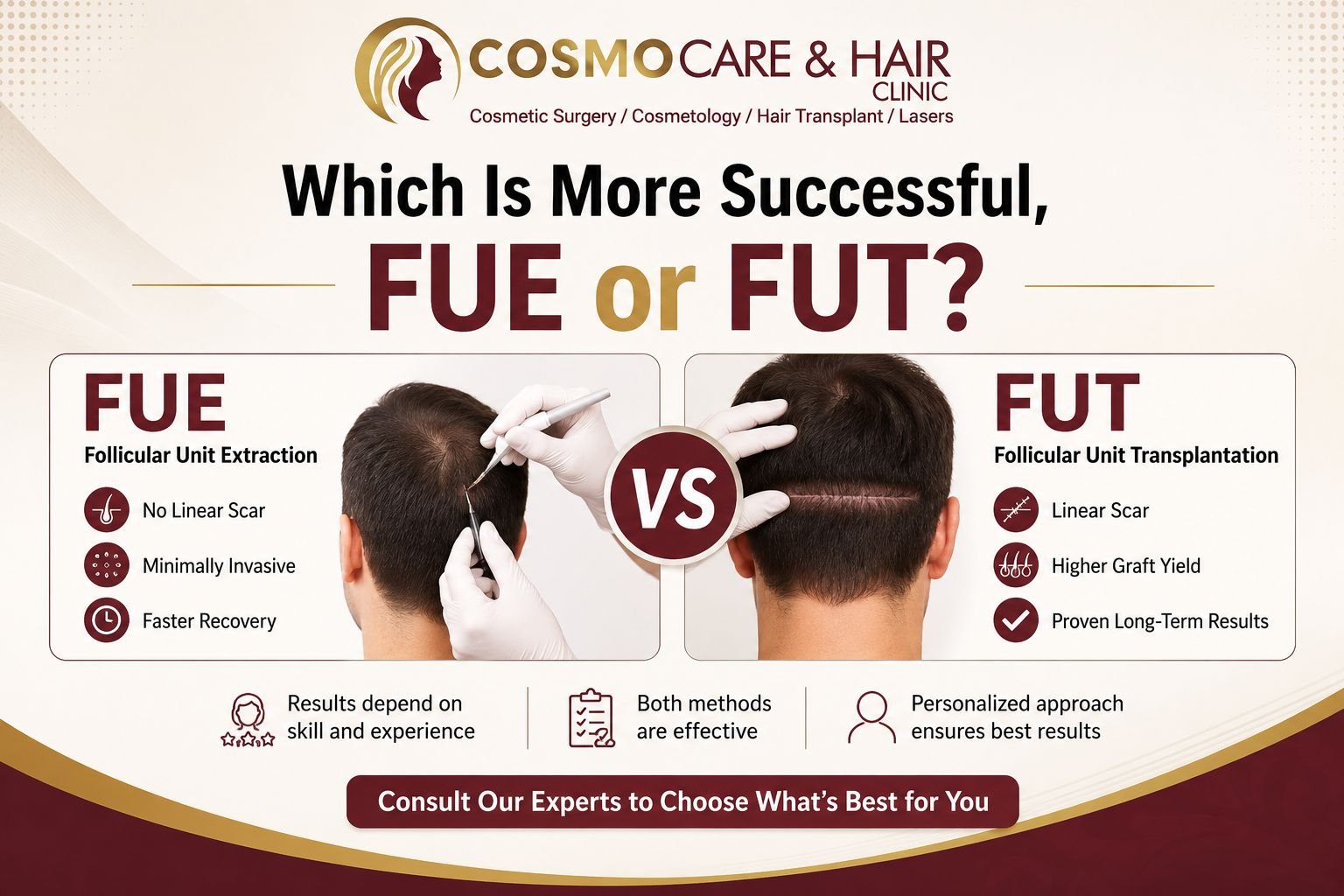
Hair transplantation has become one of the most effective solutions for people experiencing hair loss. However, many people searching for a permanent hair restoration option often ask, which is more successful, FUE or FUT? Both procedures are widely used around the world and can deliver natural-looking results when performed by experienced professionals. The success of either method depends on factors such as the patient’s hair condition, donor hair quality, treatment goals, and the surgeon’s expertise. Understanding the differences between these two techniques can help you make a more informed decision.
Understanding How FUE and FUT Hair Transplants Work
Follicular Unit Extraction (FUE) and Follicular Unit Transplantation (FUT) are the two most common hair transplant procedures. Both methods involve taking healthy hair follicles from a donor area, usually the back or sides of the scalp, and transplanting them into areas affected by hair loss.
In FUE, individual hair follicles are extracted one by one using specialized tools. These follicles are then implanted into the thinning or bald areas.
In FUT, a small strip of scalp containing healthy hair follicles is removed from the donor area. The strip is then carefully divided into individual follicular units before being transplanted.
Both techniques aim to achieve permanent and natural hair growth, but the process and recovery experience are different.
Comparing Success Rates Between FUE and FUT Methods
When discussing success rates, both FUE and FUT can provide excellent outcomes. In most cases, both procedures achieve graft survival rates above 90 percent when performed correctly.
FUT has traditionally been considered slightly more efficient because the follicles are removed together within a strip of tissue, which can reduce handling and potential damage during extraction. This may allow a higher number of grafts to survive in some cases.
FUE has improved significantly over the years due to advanced technology and refined techniques. Today, experienced surgeons can achieve success rates that are very close to FUT while providing additional cosmetic advantages.
For most patients, the difference in success rates is minimal. The overall outcome often depends more on the surgeon’s skill and treatment planning than on the technique itself.
Key Benefits That Make FUE Highly Popular Today
FUE has become one of the most requested hair transplant procedures because of its minimally invasive nature.
The major advantages of FUE include:
- No large linear scar on the scalp
- Faster healing process
- Less post-procedure discomfort
- Suitable for short hairstyles
- Lower risk of noticeable scarring
Many younger patients and professionals prefer FUE because they can return to their daily routine more quickly. The procedure also provides flexibility for patients who want to keep their hair very short.
Because of these benefits, FUE is often viewed as the preferred option for individuals seeking a modern and less invasive hair restoration solution.
Important Advantages That Still Favor FUT Procedures
Although FUE is highly popular, FUT continues to offer several important advantages.
One of the biggest benefits of FUT is the ability to harvest a large number of grafts during a single session. This can be helpful for patients with extensive hair loss who require maximum coverage.
Other advantages include:
- Potentially higher graft yield
- Efficient harvesting for large procedures
- Reduced shaving requirements in some cases
- Strong preservation of follicle integrity
Patients with advanced baldness may benefit from FUT because it allows surgeons to collect a substantial number of healthy follicles without overharvesting the donor area.
Factors That Influence Hair Transplant Success Results
The success of any hair transplant depends on much more than choosing FUE or FUT.
Several factors play an important role in determining the final outcome:
Donor Hair Quality
Strong and healthy donor hair provides better graft survival and long-term growth.
Surgeon Experience
The expertise of the surgeon significantly affects follicle handling, placement, and overall appearance.
Patient Health Condition
Good scalp health and overall wellness support faster healing and stronger hair growth.
Proper Aftercare
Following post-transplant instructions helps protect newly implanted grafts and improves recovery.
Extent of Hair Loss
The amount of existing hair loss influences treatment planning and expected density.
Patients who carefully follow medical advice usually experience better and more predictable results.
Recovery Experience After FUE and FUT Treatments
Recovery is another important factor when comparing these procedures.
FUE typically offers a quicker recovery because there is no large incision. Small extraction points heal within a few days, and most patients return to normal activities relatively quickly.
FUT recovery may take slightly longer because the donor area requires stitches or staples. Patients can experience mild tightness or discomfort during the healing period.
Despite these differences, both procedures generally allow patients to resume their regular lifestyle within a short time when proper care instructions are followed.
Which Hair Transplant Method Looks More Natural?
Many people worry about whether their hair transplant will look natural. The good news is that both FUE and FUT can produce highly natural-looking results.
Natural appearance depends on factors such as:
- Hairline design
- Graft placement angle
- Density planning
- Surgeon expertise
Modern transplantation techniques enable both procedures to create results that blend naturally with existing hair. Most people cannot distinguish between hair transplanted through FUE or FUT once growth is complete.
Choosing The Right Procedure For Your Hair Goals
The best procedure depends on your individual needs and expectations.
FUE may be ideal if:
- You prefer minimal scarring
- You wear short hairstyles
- You want faster recovery
- You have mild to moderate hair loss
FUT may be suitable if:
- You need a large number of grafts
- You have advanced hair loss
- You want maximum graft harvesting efficiency
- You are comfortable with a linear donor scar
At Cosmo Care & Hair Clinic, patients receive personalized assessments that help determine the most suitable treatment approach based on their hair loss pattern and long-term goals.
Final Verdict On FUE Versus FUT Success Rates
When asking which is more successful, FUE or FUT, the answer is that both procedures can deliver outstanding and permanent results. FUT may offer a slight advantage in graft yield for larger cases, while FUE provides faster recovery and minimal visible scarring. The most important factor is choosing an experienced clinic and receiving a treatment plan tailored to your specific needs. With proper planning and expert care, both techniques can restore natural hair growth and improve confidence for years to come.
Frequently Asked Questions
1. Is FUE better than FUT for hair transplant success?
FUE and FUT both have high success rates. The better option depends on your hair loss condition, donor area, and treatment goals.
2. Does FUT provide more grafts than FUE?
Yes, FUT can often provide a larger number of grafts in a single session, making it suitable for extensive hair loss cases.
3. Which procedure leaves less visible scarring?
FUE generally leaves tiny dot-like scars that are difficult to notice, while FUT leaves a linear scar in the donor area.
4. How long does it take to see final hair transplant results?
Most patients begin noticing new growth within three to four months, while full results typically appear after 12 to 18 months.
5. Can both FUE and FUT provide natural-looking hair?
Yes, both methods can create natural-looking results when performed by skilled professionals using proper graft placement techniques.