
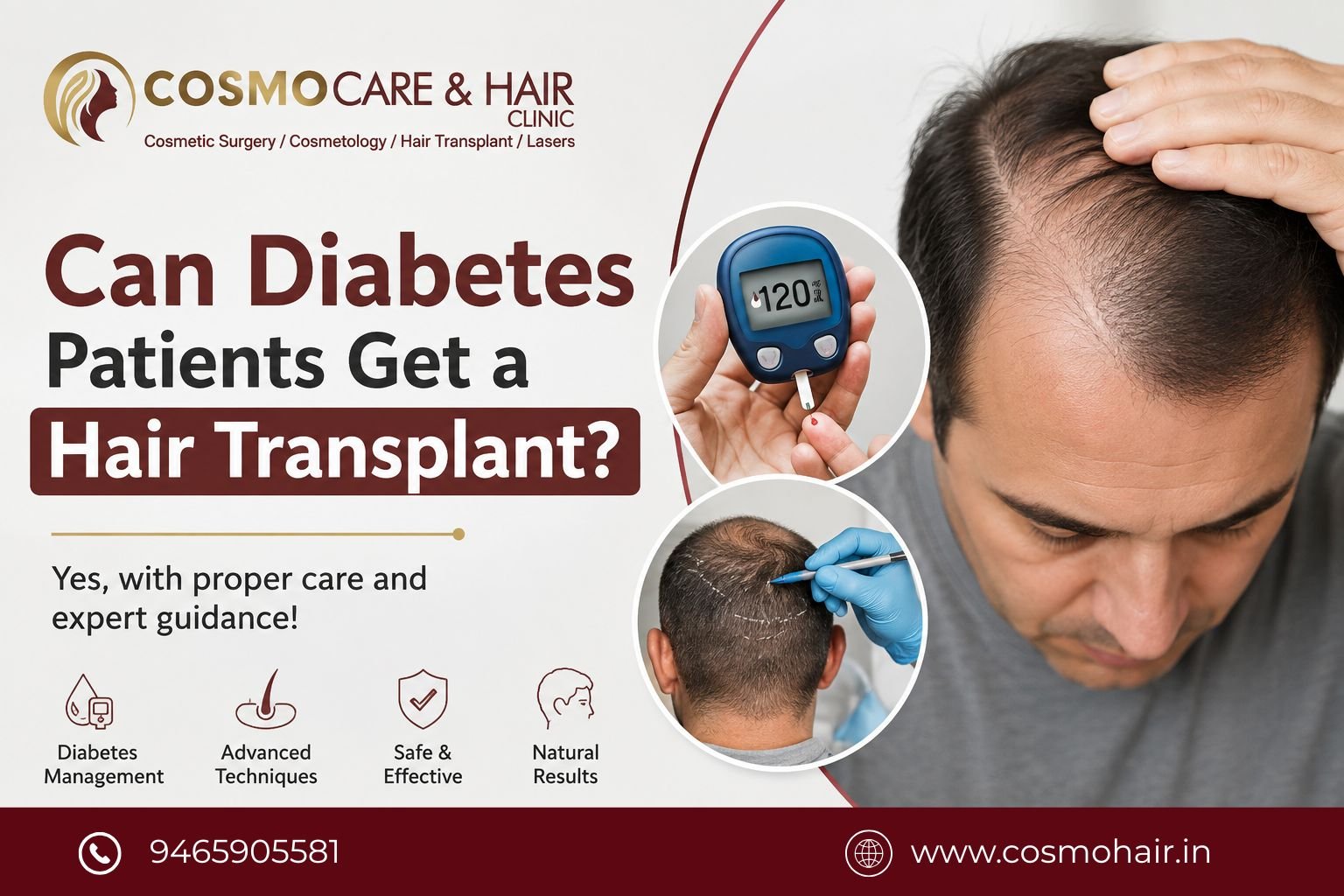
Hair loss can affect confidence and self-image, and many people living with diabetes often wonder whether they are suitable candidates for a hair transplant. The good news is that Can Diabetes Patients Get a Hair Transplant is no longer a question with a simple yes or no answer. In most cases, diabetic patients can undergo a hair transplant safely if their blood sugar levels are well controlled and their overall health is stable. Modern hair restoration techniques allow many diabetic individuals to achieve natural-looking results under proper medical supervision.
How Diabetes Can Affect Hair Growth and Hair Loss?
Diabetes can influence the body’s ability to heal and maintain healthy blood circulation. When blood sugar levels remain high for a long period, small blood vessels may become damaged, reducing the supply of oxygen and nutrients to hair follicles. This can contribute to hair thinning and slower hair growth. Some people may also experience hair loss due to hormonal changes, stress, or diabetes-related health conditions.
Although diabetes may contribute to hair loss, it does not automatically prevent a person from receiving a hair transplant. The key factor is how effectively the condition is managed before and after the procedure.
Can Diabetic Patients Be Good Hair Transplant Candidates?
Many diabetic patients are suitable candidates for hair transplant surgery. However, doctors usually perform a detailed health assessment before approving the procedure. They review blood sugar levels, medical history, medications, and overall health status.
Patients with controlled diabetes generally have a much lower risk of complications compared to those with uncontrolled diabetes. Hair transplant specialists often recommend that blood glucose levels remain stable before surgery to support proper healing and graft survival.
A successful hair transplant also depends on having a healthy donor area and realistic expectations about the outcome.
Why Blood Sugar Control Matters Before Surgery?
One of the most important factors for diabetic patients considering a hair transplant is blood sugar management. High blood sugar levels can increase the risk of infection, delayed wound healing, and poor recovery after surgery.
Doctors often recommend specific blood tests, including blood sugar monitoring and HbA1c evaluation, to understand how well diabetes is controlled. If blood sugar levels are unstable, the procedure may be postponed until better control is achieved.
Proper diabetes management before surgery helps the body heal more efficiently and supports healthy hair growth after transplantation.
What Risks Should Diabetic Patients Understand?
Every surgical procedure carries some level of risk, and hair transplantation is no exception. For diabetic patients, the most common concerns include:
- Slower wound healing
- Increased infection risk
- Reduced blood circulation
- Delayed recovery
- Lower graft survival in poorly controlled cases
These risks are generally higher when diabetes is uncontrolled. Patients who maintain healthy blood sugar levels and follow medical advice usually experience smoother recovery and better results.
Which Hair Transplant Techniques Work Best for Diabetics?
Modern hair transplant procedures are designed to be minimally invasive. Techniques such as Follicular Unit Extraction (FUE) are widely used because they involve smaller incisions and typically result in faster healing.
The most suitable technique depends on the patient’s scalp condition, donor hair availability, and medical history. A qualified hair transplant surgeon will evaluate these factors and recommend the most appropriate treatment plan. According to hair restoration guidelines, follicular unit transplantation methods provide natural-looking outcomes when performed on suitable candidates.
Important Steps Before a Hair Transplant Procedure
Diabetic patients should take several precautions before undergoing hair restoration surgery.
First, they should consult both their diabetes specialist and hair transplant surgeon. A complete health evaluation helps identify any potential risks before the procedure.
Patients may also be advised to:
- Maintain stable blood sugar levels
- Follow prescribed medications
- Stay hydrated
- Avoid smoking and excessive alcohol consumption
- Complete recommended blood tests
- Discuss all existing medical conditions
These preparations help improve surgical safety and support a smoother recovery process.
How Recovery Differs for Diabetic Hair Transplant Patients?
Recovery after a hair transplant can vary from person to person. Diabetic patients may require closer monitoring during the healing period. Following aftercare instructions carefully is essential for protecting transplanted grafts and preventing complications.
Patients should keep the scalp clean, avoid scratching the treated area, take prescribed medications on time, and continue monitoring blood sugar levels throughout recovery. Good diabetes management can significantly improve healing and overall transplant success.
Most patients can return to their normal routine within a few days, although complete hair growth results typically develop gradually over several months.
How Expert Evaluation Improves Hair Transplant Success?
A personalized medical assessment plays a major role in achieving successful results. Every diabetic patient has different health conditions, medication requirements, and healing abilities. An experienced clinic will carefully evaluate these factors before recommending treatment.
At Cosmo Care & Hair Clinic, patients receive detailed assessments to determine whether a hair transplant is safe and suitable for their specific condition. This individualized approach helps improve safety and long-term results.
With proper planning, controlled diabetes should not prevent someone from restoring their hair and confidence through modern hair transplantation techniques.
Final Thoughts
Diabetes does not automatically disqualify a person from getting a hair transplant. Many diabetic individuals achieve successful and natural-looking results when their condition is properly managed. The most important factors are stable blood sugar levels, good overall health, and guidance from experienced medical professionals.
If you are considering hair restoration and have diabetes, a thorough consultation can help determine the safest and most effective treatment plan. Cosmo Care & Hair Clinic can provide professional guidance based on your individual health profile and hair restoration goals.
Frequently Asked Questions
Can a diabetic patient safely get a hair transplant?
Yes, many diabetic patients can safely undergo a hair transplant if their blood sugar levels are well controlled and they receive proper medical clearance.
Does diabetes affect hair transplant results?
Uncontrolled diabetes may increase the risk of slower healing and infection. Controlled diabetes generally allows for better transplant outcomes.
Is FUE suitable for diabetic patients?
FUE is often considered suitable because it is minimally invasive and typically involves faster recovery compared to older techniques.
What tests are needed before a hair transplant?
Doctors may recommend blood sugar tests, HbA1c testing, routine blood work, and a general health evaluation before surgery.
How long does recovery take after a hair transplant?
Most patients recover from the initial procedure within a few days, while visible hair growth develops gradually over several months.