
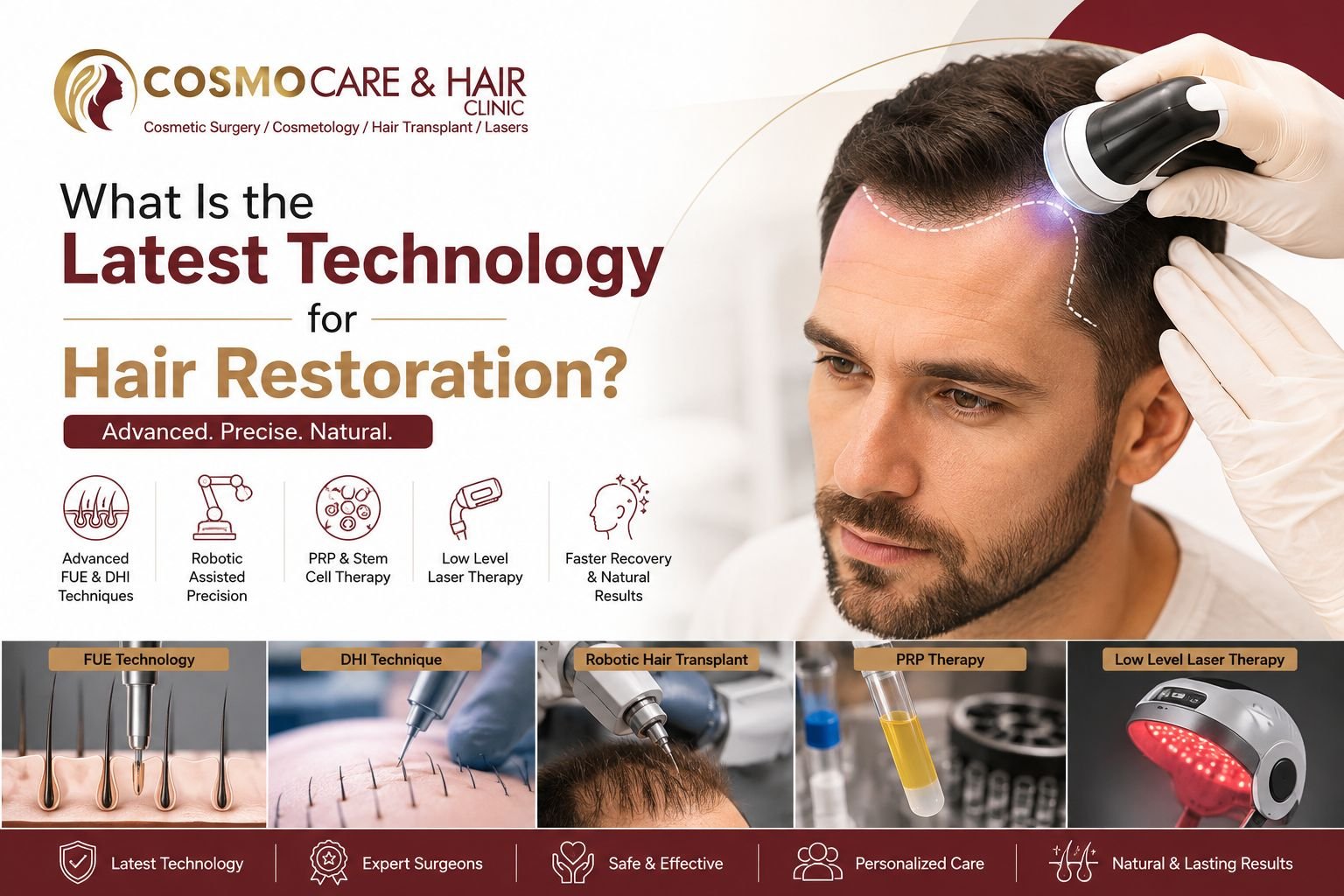
Hair restoration has improved significantly in recent years. People who suffer from hair loss now have access to more advanced, natural-looking, and effective treatments than ever before. The latest technology for hair transplant focuses on improving hair density, reducing recovery time, and creating results that look completely natural. From advanced FUE techniques to regenerative therapies like PRP, exosomes, and robotic-assisted procedures, modern hair restoration offers better outcomes for both men and women. Research also shows growing interest in regenerative treatments that support follicle health and hair growth.
Advanced FUE Technology for Natural Hair Growth
Follicular Unit Extraction (FUE) remains one of the most popular and trusted hair restoration procedures today. Modern FUE technology allows surgeons to extract and implant individual hair follicles with greater precision. This results in minimal scarring, faster healing, and a more natural hairline.
The latest FUE systems use improved tools and techniques to protect grafts during extraction and placement. Because each follicle is handled carefully, survival rates are higher, leading to better hair growth after the procedure. Many patients prefer advanced FUE because it offers long-lasting and natural-looking results.
DHI Hair Restoration with Better Graft Precision
Direct Hair Implantation (DHI) is another advanced technology that has gained popularity. This technique uses a specialized implantation tool that allows hair follicles to be placed directly into the scalp without creating separate incisions first.
The main advantage of DHI is greater control over the angle, depth, and direction of each graft. This helps create a dense and natural appearance. DHI is especially useful for designing hairlines and restoring areas where precision is important.
Robotic Hair Transplant Systems and AI Support
One of the newest developments in hair restoration is robotic-assisted hair transplantation. Robotic systems use artificial intelligence and advanced imaging technology to identify healthy donor follicles and assist in the extraction process.
These systems help improve accuracy, reduce human error, and increase consistency during the procedure. Experts believe robotic technology can improve graft survival and provide highly precise results for suitable candidates. AI-driven tools are making hair restoration more personalized and efficient.
PRP Therapy for Faster Hair Growth Recovery
Platelet-Rich Plasma (PRP) therapy is widely used as a supportive treatment for hair restoration. PRP is created using the patient’s own blood, which is processed to concentrate growth factors.
When injected into the scalp, PRP may help improve blood circulation around hair follicles and support healing after a hair transplant. Studies show that PRP remains one of the most researched regenerative treatments in hair restoration and is commonly used to enhance overall results.
Exosome Therapy as an Emerging Hair Solution
Exosome therapy is one of the most talked-about innovations in the hair restoration industry. Exosomes are tiny particles that help cells communicate and support tissue repair.
Researchers believe exosome therapy may help stimulate hair follicles, improve scalp health, and encourage hair growth. While early studies show promising results, experts note that more clinical research is needed before it becomes a standard treatment worldwide. For now, it is considered an emerging technology with significant future potential.
Low Level Laser Therapy for Hair Regeneration
Low Level Laser Therapy (LLLT) uses light energy to stimulate hair follicles and improve scalp circulation. This non-surgical treatment is commonly used alongside other hair restoration procedures.
Many clinics recommend laser therapy after hair transplantation because it may support healing and encourage healthier hair growth. It is painless, requires no downtime, and can be used as part of a long-term hair maintenance program.
Stem Cell Research and Future Hair Restoration
Stem cell-based treatments are considered one of the most exciting areas of hair restoration research. Scientists are exploring ways to use stem cells to regenerate hair follicles and improve hair growth naturally.
Although stem cell hair restoration is still under development, researchers believe it could transform the future of hair loss treatment. Future advancements may allow patients to generate new hair follicles rather than relying solely on donor hair.
Personalized Hair Restoration Using Modern Technology
Modern hair restoration is becoming more personalized than ever before. Doctors now evaluate factors such as hair loss pattern, donor hair quality, scalp condition, age, and medical history before creating a treatment plan.
Many specialists combine multiple technologies such as FUE, PRP, laser therapy, and medical treatments to achieve the best outcome. This customized approach helps improve success rates and provides long-term satisfaction for patients.
Choosing the Right Clinic for Hair Restoration
While technology plays a major role in successful hair restoration, the experience of the surgeon and medical team remains equally important. A qualified clinic will carefully assess your condition and recommend the most suitable treatment based on your goals.
At Cosmo Care & Hair Clinic, patients can explore advanced hair restoration options designed to deliver natural-looking results with modern techniques and patient-focused care. Choosing an experienced team helps ensure safety, comfort, and successful outcomes throughout the treatment journey.
Final Thoughts on Modern Hair Restoration Methods
The latest technology for hair restoration combines advanced surgical techniques with regenerative therapies and artificial intelligence. FUE, DHI, robotic-assisted transplantation, PRP, exosome therapy, and laser treatments are helping patients achieve better results than ever before. As research continues to evolve, future innovations may provide even more effective solutions for hair loss. For anyone considering treatment, consulting an experienced hair restoration specialist is the best way to understand which technology is right for their needs.
Frequently Asked Questions
1. What is the latest technology for hair restoration?
The latest technologies include advanced FUE, DHI, robotic-assisted hair transplantation, PRP therapy, exosome therapy, and low-level laser therapy.
2. Is robotic hair transplantation better than traditional methods?
Robotic systems improve precision and consistency, but successful results still depend on the expertise of the surgeon and overall treatment plan.
3. What is PRP therapy for hair restoration?
PRP therapy uses concentrated platelets from the patient’s blood to support hair follicle health and improve healing after hair restoration procedures.
4. Is exosome therapy approved for hair loss treatment?
Exosome therapy is an emerging treatment that shows promise, but further clinical studies are needed to establish long-term effectiveness and standardized protocols.
5. Which hair restoration technology provides the most natural results?
Advanced FUE and DHI techniques are currently considered among the best options for achieving natural-looking and long-lasting hair restoration results.