
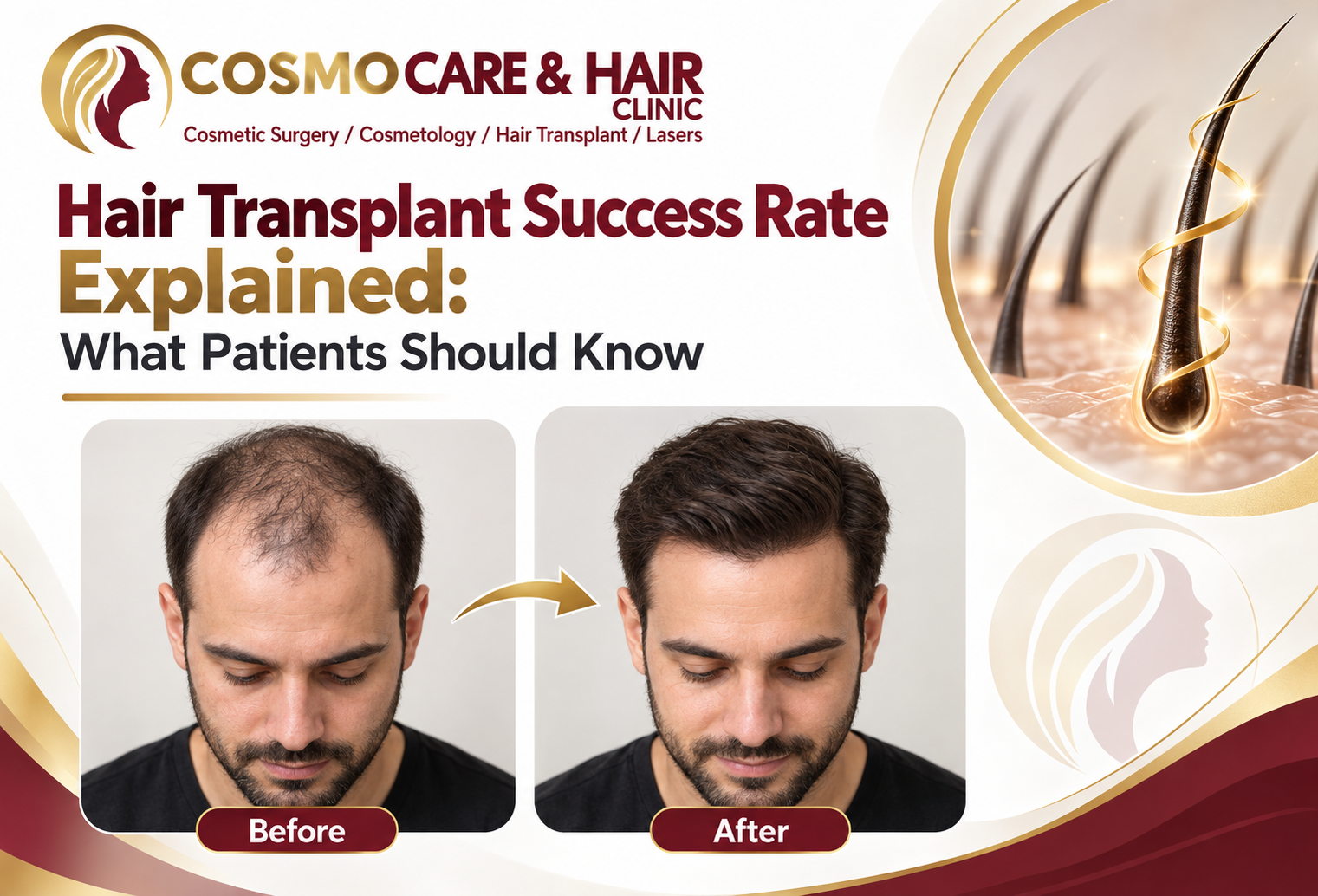
A hair transplant success rate is often one of the first things people ask about before choosing surgery. Hair Transplant Success Rate generally refers to how well transplanted hair follicles survive, grow, and contribute to a natural-looking result. However, success is not measured by one number alone. Graft survival, hair density, hairline design, and patient satisfaction all matter. Understanding these factors can help you make a more informed decision and avoid unrealistic promises.
What Does Hair Transplant Success Rate Really Mean?
Hair transplant success rate usually describes the percentage of transplanted follicular units that survive and continue producing hair. A follicular unit may contain one or more hairs. This is different from simply counting the number of grafts placed during surgery. A procedure can involve thousands of grafts, but the final result depends on how many survive and how naturally they grow.
Research has reported high graft survival and satisfaction rates in hair restoration, particularly for non-scarring hair loss. One systematic review found pooled graft survival rates of approximately 85% to 93% in non-scarring alopecia, depending on the graft type and study group. These figures are useful research findings, not a guarantee for every patient.
What Is a Good Hair Transplant Success Rate?
Many clinics discuss success rates of around 90% to 95%, but patients should understand what the figure actually measures. It may refer to graft survival under specific study conditions rather than the complete appearance of the scalp. Research also shows that survival can vary according to surgical technique, graft handling, patient factors, and the area being treated.
A good result is not only about a high percentage. It should also provide a natural hairline, suitable density, and a balanced appearance. A patient with excellent graft survival may still be unhappy if the hairline is poorly designed or the transplanted area does not match the surrounding hair. This is why success should be assessed through both biological survival and the overall aesthetic outcome.
Which Factors Affect Hair Transplant Success Rates?
Several factors can influence the outcome of hair transplant surgery. The quality of the donor hair is important because strong, healthy follicles are generally better suited for transplantation. The condition of the recipient area also matters, especially when the scalp has scarring or active inflammation.
The surgical technique and handling of grafts are equally important. Follicles must be removed carefully, kept hydrated, and protected from unnecessary damage before implantation. A review of graft survival research highlights patient selection, surgical technique, storage conditions, and gentle graft handling as important factors affecting survival.
The surgeon’s experience also matters because graft placement must be planned according to the patient’s hair pattern, facial features, and available donor supply. In addition, existing hair loss may continue after surgery. This can affect the overall appearance even when transplanted grafts survive well.
How Do FUE and FUT Affect Hair Transplant Success?
FUE and FUT are two established hair transplant techniques. In FUE, individual follicular units are extracted from the donor area. In FUT, a strip of scalp is removed and divided into individual grafts. Both methods can produce good results when used appropriately.
It is not accurate to assume that one technique always has a higher success rate for every patient. Research comparing FUE and FUT has found differences in survival, but modern surgical methods and careful graft handling can influence the results. The best approach depends on factors such as donor hair quality, the number of grafts required, and the patient’s goals.
Why Hair Growth Takes Time After Transplant Surgery?
Hair transplant results do not appear immediately. Transplanted hair commonly sheds during the early healing period, while the follicles remain in the scalp. New growth usually develops gradually over the following months.
Patients should avoid judging the final result too early. Hair thickness and overall appearance continue to improve as the transplanted follicles produce new hair. A proper follow-up schedule allows the surgeon to assess progress and identify any concerns during recovery.
How Patient Health Affects Hair Transplant Results?
A patient’s general health and scalp condition can influence the success of surgery. Active scalp infections, uncontrolled inflammation, or certain types of scarring hair loss may require treatment before transplantation is considered.
Scarring alopecia needs particular attention because the disease can damage hair follicles and affect the recipient area. A 2025 systematic review of hair transplantation for primary cicatricial alopecia found that graft survival varied over time and that some patients experienced disease reactivation. This shows why patients with scarring hair loss need careful diagnosis and long-term follow-up.
How Long Do Hair Transplant Results Last?
Transplanted hair is generally intended to provide long-term coverage, but the result is not completely separate from the natural progression of hair loss. Hair transplantation redistributes existing hair follicles rather than creating new ones. If untreated hair continues to thin, the overall appearance may change over time.
For this reason, a long-term treatment plan may include medical management, regular monitoring, and additional surgery when appropriate. The goal is to preserve both transplanted and existing hair as much as possible.
What Should Patients Ask Before Choosing Surgery?
Before choosing a clinic, patients should ask about the surgeon’s qualifications, the proposed number of grafts, the expected density, and the likely recovery period. It is also useful to ask how the clinic measures success and whether results are assessed after sufficient time for hair growth.
Patients should be cautious of claims that promise a guaranteed 100% success rate. Hair transplantation is a medical procedure, and outcomes vary between individuals. A realistic consultation should explain both the expected benefits and the limitations of surgery.
At Cosmo Care & Hair Clinic, patients can discuss their hair loss concerns, donor hair availability, and treatment goals during a consultation. A personalized assessment helps determine whether transplantation is suitable and what type of result may be realistic.
Final Thoughts
Hair transplant success rate is an important part of understanding surgery, but it should never be the only deciding factor. A successful procedure combines good graft survival, natural hair placement, suitable density, and realistic expectations.
Patients should focus on the quality of the treatment plan rather than a single percentage. Choosing an experienced medical team, following aftercare instructions, and managing ongoing hair loss can all contribute to a better long-term outcome.
Frequently Asked Questions About Hair Transplant Success
1. What is the average hair transplant success rate?
Research reports high graft survival in many non-scarring hair loss patients, but the exact rate varies by study and individual circumstances.
2. Is a 100% hair transplant success rate possible?
No clinic can guarantee that every transplanted graft will survive. Biological variation and surgical factors mean that outcomes differ between patients.
3. Is FUE better than FUT for success?
Both techniques can produce good results. The most suitable method depends on the patient’s donor hair, treatment goals, and clinical assessment.
4. When can I judge my final hair transplant result?
Hair growth takes time, and the final appearance should be assessed after sufficient recovery and maturation. Your surgeon can guide you on the appropriate follow-up period.
5. Can transplanted hair fall out later?
Transplanted hair is intended to provide long-term coverage, but existing hair may continue to thin. Ongoing hair loss management can help protect the overall result.