
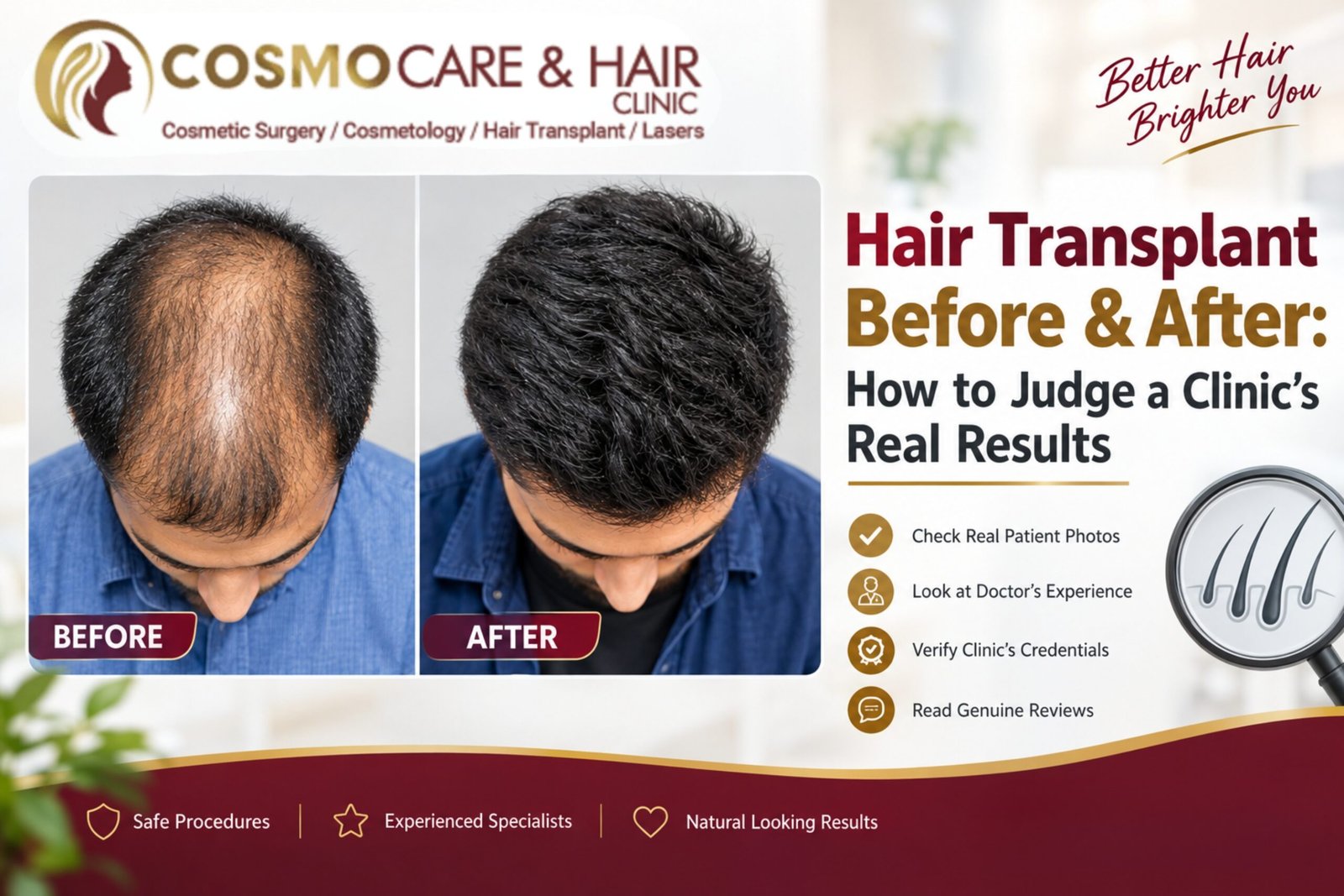
If you are thinking about getting a hair transplant, you have probably spent time looking at Hair Transplant Before & After photos. Some results look impressive, with fuller hairlines and better coverage. But how can you tell whether those results are genuinely good or simply look better because of lighting, styling, or camera angles?
This is an important question to ask before choosing a clinic. A successful hair transplant is not just about filling bald areas with hair. The hairline should suit the face, the transplanted hair should grow in the right direction, and the overall result should look natural rather than obvious.
Before making a decision, it helps to know what to look for in patient photographs, how long hair takes to grow after treatment, and which questions to ask during a consultation.
What Makes a Hair Transplant Result Look Natural?
The best results are not always the ones showing the thickest hair. In many cases, the difference comes down to how well the transplanted hair fits the person’s face and existing hair.
For example, a hairline that looks natural on a younger patient may not suit someone older. Similarly, a patient with thick hair may achieve better visual coverage than someone with fine hair, even if both receive a similar number of grafts.
When reviewing a clinic’s results, pay attention to three things:
- Hairline: Does it look natural, or is it too straight and sharply defined?
- Density: Does the transplanted area blend with the surrounding hair?
- Hair direction: Does the hair appear to grow in a natural pattern?
These details can tell you more about the quality of the work than a simple comparison of how much hair has been added.
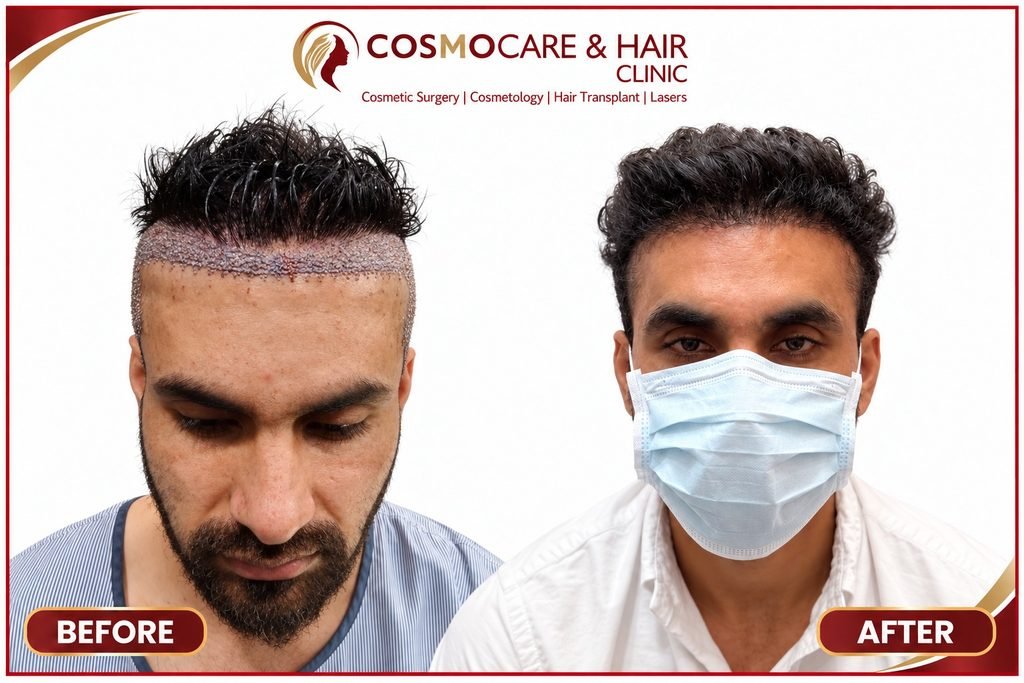
How to Read Hair Transplant Before & After Photos?
Before-and-after pictures are useful, but only when you know how to assess them. A single photograph rarely tells the whole story, so take time to look at the details.
Check the Hairline, Not Just the Hair Count
The front hairline is usually the first thing people notice. If it looks too low, too straight, or too dense at the front, it can make the transplant look unnatural.
A well-planned hairline usually has slight variations rather than a perfectly straight edge. It should also suit the person’s facial proportions and take possible future hair loss into account.
Look closely at the temples as well. These areas help frame the face, and the way they connect with the front hairline can make a noticeable difference to the overall appearance.
Look at the Density in Different Areas
A transplant may focus on the front hairline, the middle of the scalp, the crown, or a combination of these areas. Each requires a different approach.
When comparing photos, check whether the coverage looks reasonably even and whether the transplanted area blends with the existing hair. Do not expect every patient to have the same density because hair thickness, scalp characteristics, and donor hair availability vary.
It is also worth remembering that adding more grafts does not automatically mean achieving a better result. The available donor hair must be used carefully, especially if the patient may experience further hair loss.
Check Whether the Hair Grows in the Right Direction
Hair does not grow in the same direction across the entire scalp. The front hairline, temples, and crown all have different growth patterns.
In before-and-after photos, look for hair that follows the natural direction of the surrounding strands. If the hair appears to stand up awkwardly or grow in an unusual direction, ask the clinic how graft placement was planned.
This is particularly important around the hairline, where even small differences in angle can affect the final appearance.
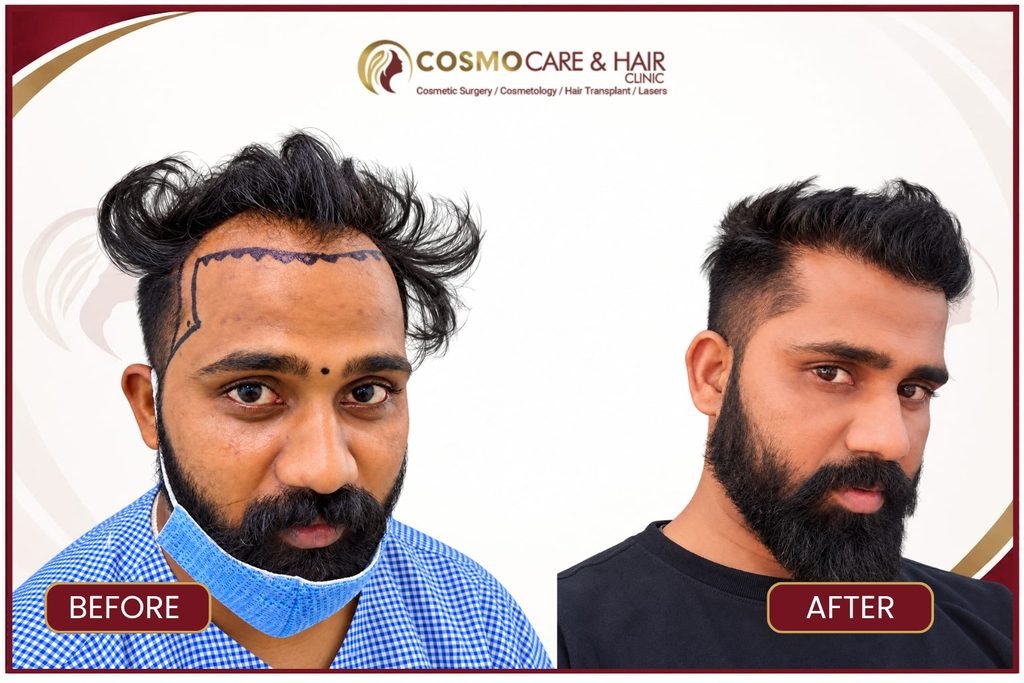
Are the Before-and-After Photos a Fair Comparison?
Sometimes two photographs can make the results look more dramatic than they really are. This does not necessarily mean the pictures are misleading, but differences in presentation can make accurate comparison difficult.
Here is what you should check before judging a clinic’s results.
| What to check | Why it matters |
|---|---|
| Lighting | Bright or dim lighting can change how much scalp is visible. |
| Hair length | Longer hair can cover thinning areas more effectively. |
| Camera angle | Different angles can make the hairline or crown look fuller. |
| Hair styling | Combed or styled hair may create the appearance of extra volume. |
| Time after treatment | Early growth and mature results can look very different. |
| Multiple views | Front, side, and top views provide a clearer picture of the outcome. |
Ideally, the clinic should show photographs taken under similar conditions, with the time since treatment clearly explained.
Do not hesitate to ask whether the images show actual patients treated by the clinic. You can also ask to see examples involving people with a similar pattern of hair loss to yours.
How Long Does It Take to See Hair Transplant Results?
One thing that often surprises patients is how long the process takes. A hair transplant does not produce a full head of hair immediately, and the early appearance of the scalp is not a reliable indication of the final result.
The First Few Weeks After Treatment
During the initial recovery period, small scabs, redness, and tenderness may occur. The scalp needs time to heal, and patients should follow the aftercare instructions provided by their clinician.
Some of the transplanted hair may shed during the following weeks. This is a common part of the process and does not necessarily mean the transplant has failed.
Three to Six Months After Treatment
New growth may start becoming visible during this period. However, the hair can appear fine, uneven, or less dense than expected.
This is why comparing your progress with photographs of patients who are already a year into recovery can be misleading. The two images represent different stages of growth.
Six to Twelve Months and Beyond
Many patients notice more substantial cosmetic improvement between six and twelve months. Hair may continue to mature beyond this period, and the crown can take longer to show its full cosmetic effect.
The exact timeline differs from person to person. Your clinician should explain when your results are likely to be assessed and whether further follow-up is recommended.
Why Your Results May Not Match Someone Else’s?
It is natural to compare your expected results with photographs of other patients. However, two people can undergo hair transplantation and still achieve different levels of coverage.
Several factors explain why.
Hair thickness and texture: Thick or wavy hair may provide the appearance of greater coverage than fine, straight hair.
Donor area: The amount and quality of available donor hair affect how much can be transplanted safely.
Extent of hair loss: Covering a small receding hairline is different from restoring a large bald area.
Graft placement: How grafts are distributed between the hairline, middle scalp, and crown influences the overall appearance.
Future hair loss: Existing hair may continue to thin after a transplant, which can change the overall result over time.
A realistic treatment plan takes these factors into account instead of promising that every patient can achieve the same density.
Questions Worth Asking Before Choosing a Clinic
Before deciding on a hair transplant, take your time during the consultation. Photographs can help you understand what may be possible, but they cannot replace an assessment of your own hair and scalp.
Here are some useful questions to ask:
- Can I see before-and-after photos of patients with a hair loss pattern similar to mine?
- How long after treatment were these photographs taken?
- How will you decide the shape and position of my hairline?
- How much donor hair is available, and how will it be managed?
- What kind of coverage can I realistically expect?
- Could my existing hair continue to thin after the procedure?
- What aftercare and follow-up will I need?
Be cautious if a clinic promises guaranteed density or suggests that your results will look exactly like someone else’s. A responsible treatment recommendation should be based on your individual needs, not just attractive photographs.
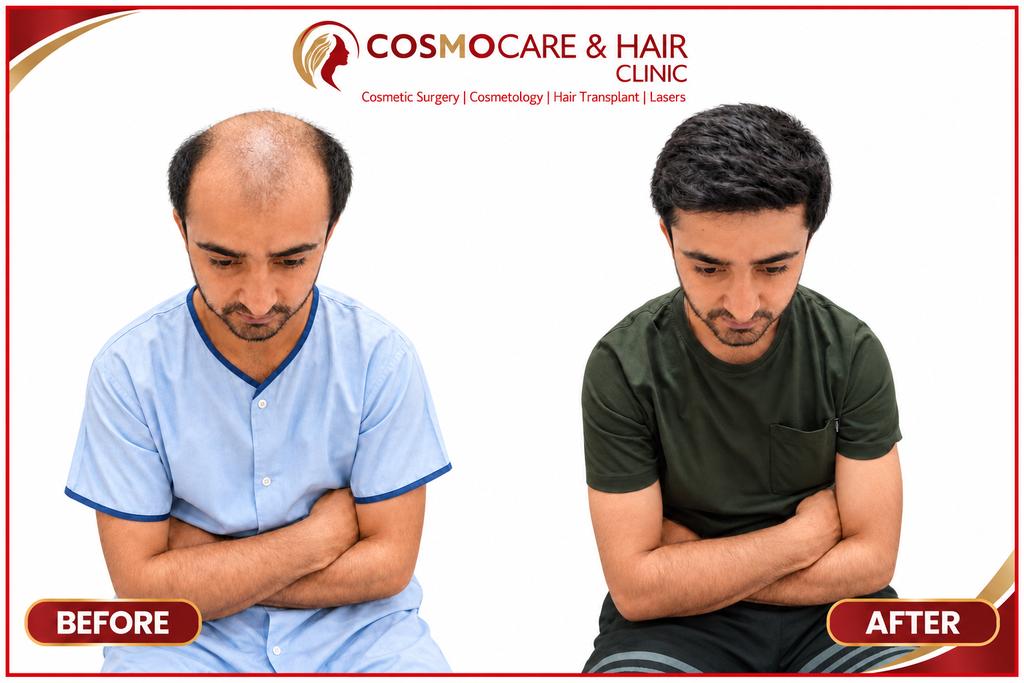
Choosing the Right Hair Transplant Treatment for Better Results
If you are exploring hair restoration options, the consultation should be about more than choosing a procedure. It should help you understand why you are experiencing hair loss, what treatment may be suitable, and what kind of improvement is realistic.
At Cosmo Care & Hair Clinic, Dr. Rahul Goyal provides hair transplant treatment with an individualised approach to hairline design, donor area assessment, and graft placement.
The treatment plan considers the patient’s existing hair, the extent of hair loss, facial proportions, and overall restoration goals. These details matter because the aim is not simply to add hair, but to create an appearance that blends naturally with the hair already present.
During your consultation, you can discuss your expectations, review relevant patient photographs, and understand the expected recovery and growth timeline. This also gives you an opportunity to ask questions about long-term planning and ongoing hair loss.
Remember that results vary between individuals. A consultation helps establish what may be achievable in your particular case.
Final Thoughts
Hair transplant photos can help you understand a clinic’s work, but it is important to look beyond the immediate visual difference. A natural hairline, suitable density, correct growth direction, and a realistic treatment plan all contribute to the final appearance.
Take time to compare photographs fairly, check how long patients have been followed up, and ask questions about cases similar to yours. Most importantly, avoid choosing a clinic based on one dramatic transformation or a promise of guaranteed results.
If you are considering a hair transplant, book a consultation with Dr. Rahul Goyal at Cosmo Care & Hair Clinic to discuss your hair loss concerns and understand which treatment options may suit your needs.
Frequently Asked Questions
1. What should I look for in hair transplant before-and-after photos?
Look at the hairline shape, density, hair direction, and how well the transplanted area blends with existing hair. Check whether the photos use similar lighting and angles, and ask how long after treatment they were taken.
2. When do hair transplant results become noticeable?
New growth may become noticeable around three to six months after treatment. Many patients see substantial cosmetic improvement between six and twelve months, although further maturation may take longer.
3. Can hair transplant results look completely natural?
Natural-looking results are possible, but they depend on factors such as hairline design, graft placement, hair characteristics, donor hair availability, and the individual’s healing and growth pattern. No clinic can guarantee an identical outcome for every patient.
4. Why does the crown take longer to show hair transplant results?
The crown has a circular growth pattern, and changes in coverage can be harder to assess. Hair growth also varies between individuals, so the crown may take longer to show its full cosmetic effect than some other areas.
5. How can I choose the right hair transplant clinic?
Review genuine patient photographs, ask about follow-up periods, discuss the surgeon’s treatment plan, and understand the risks and limitations. Choose a clinic that provides an individual assessment and realistic expectations rather than promising guaranteed results.