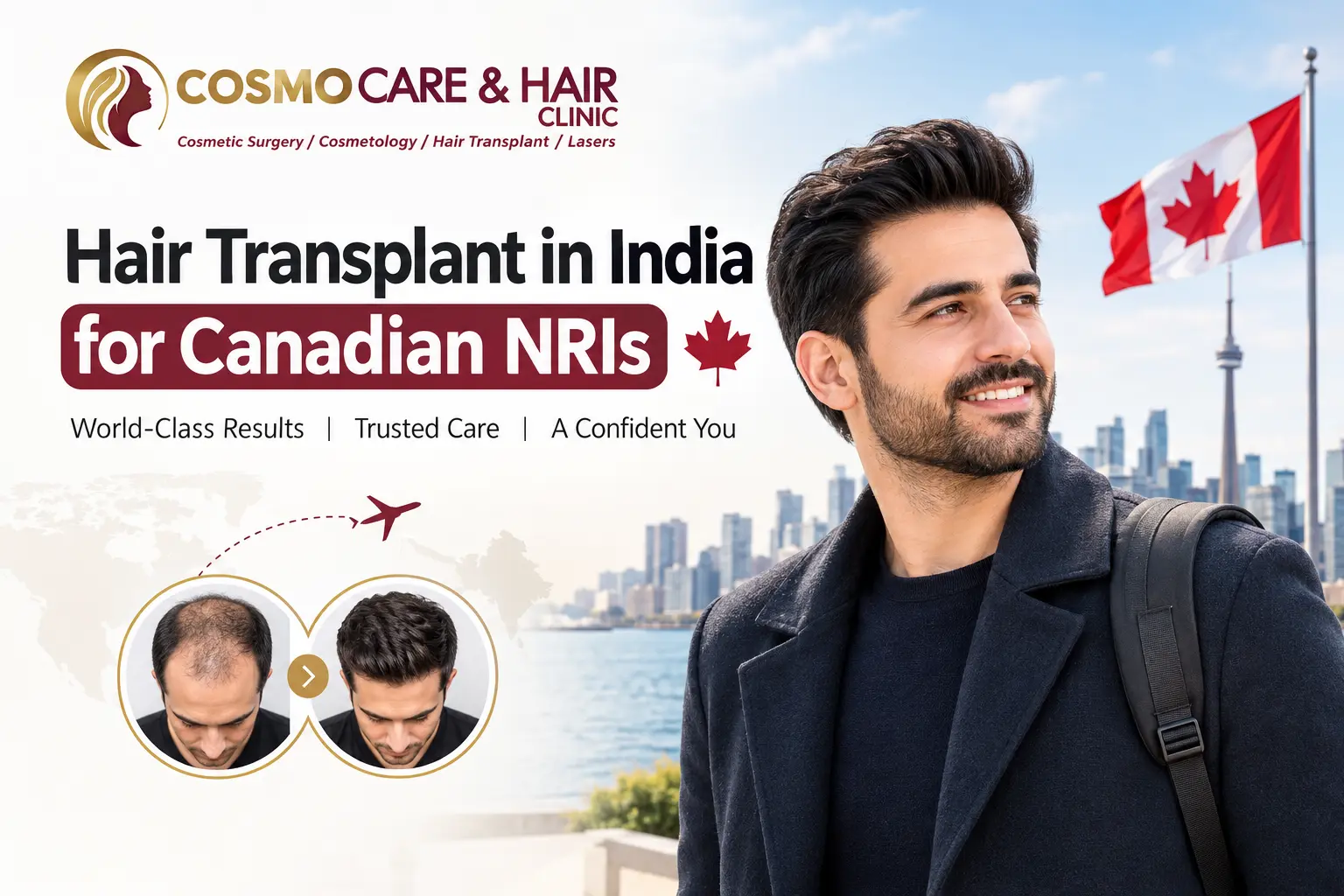
Hair loss can gradually affect your appearance, confidence, and the way you feel about yourself. For many Non-Resident Indians (NRIs) living in Canada, finding the right hair restoration treatment involves more than choosing a clinic. It requires understanding the procedure, surgeon’s experience, treatment costs, recovery time, and arrangements for follow-up care. Hair Transplant in India for Canadian NRIs has become an important consideration for people who want to receive treatment in their home country while staying connected to familiar surroundings, family support, and healthcare professionals who understand their concerns.
India offers different hair restoration options, experienced medical professionals, and treatment facilities catering to international patients. However, travelling overseas for a surgical procedure requires careful preparation. Before booking flights or selecting a clinic, Canadian NRIs should understand whether they are suitable candidates, which technique may be appropriate, and how to manage recovery after returning to Canada.
This guide explains the important factors to consider when planning a hair transplant in India during 2026–2027.
Why Canadian NRIs Consider Hair Transplant in India?
There are several reasons why people living in Canada consider travelling to India for hair restoration. Apart from treatment costs, the opportunity to consult doctors in a familiar cultural environment and spend recovery time with family can make the experience more comfortable.
Here are some common considerations:
1. Access to experienced specialists: India has medical professionals with experience in hair restoration and surgical procedures. Patients can evaluate their qualifications, clinical experience, and approach before making a decision.
2. Treatment cost considerations: Hair transplant expenses can differ considerably between Canada and India. Some patients consider India after comparing the complete treatment costs, including travel, accommodation, and recovery expenses.
3. Family support during recovery: Recovering in a familiar environment with family members nearby can provide practical and emotional support during the initial healing period.
4. Personalised consultations: Patients can discuss their hair loss history, expectations, donor area condition, and long-term treatment requirements directly with the medical team.
However, travelling for treatment should never be based on price alone. The surgeon’s qualifications, patient safety, treatment planning, and availability of follow-up care should remain the priorities.
Who Is the Right Candidate for Hair Transplant?
Not everyone experiencing hair loss needs a transplant. The suitability of the procedure depends on the underlying cause of hair loss, the condition of the scalp, donor hair availability, age, and overall health.
A hair transplant is generally considered for individuals experiencing permanent pattern hair loss when sufficient healthy donor hair is available.
A specialist may evaluate the following factors:
- Hair loss pattern: Whether hair loss is stable, progressive, hereditary, or associated with another condition.
- Donor area quality: Whether the back and sides of the scalp have enough healthy follicles for transplantation.
- Age and future hair loss: Younger patients may require additional planning because hair loss can continue after surgery.
- Medical history: Existing health conditions, medications, and previous scalp treatments must be considered.
- Expectations: Patients should understand that a transplant improves hair coverage but cannot recreate unlimited natural hair density.
People experiencing sudden hair loss, patchy baldness, active scalp infections, or certain inflammatory hair disorders may require medical evaluation before considering surgery.
A proper diagnosis should always come before a treatment recommendation.
Understanding Different Hair Transplant Techniques
Two commonly used surgical methods are Follicular Unit Extraction (FUE) and Follicular Unit Transplantation (FUT). Both involve transferring hair follicles from a donor area to areas affected by thinning or baldness, but the harvesting process is different.
1. Follicular Unit Extraction (FUE)
FUE involves extracting individual follicular units from the donor area using specialised instruments. These grafts are then placed into carefully prepared recipient sites.
Its main characteristics include:
- Individual follicular unit extraction.
- Multiple small extraction marks instead of one linear donor scar.
- Usually shorter visible donor-area healing compared with FUT.
- Suitable for patients whose donor area and treatment goals support this approach.
FUE may be considered by patients who prefer shorter hairstyles, although the donor area can still develop small scars.
2. Follicular Unit Transplantation (FUT)
FUT, also called the strip method, involves removing a narrow strip of hair-bearing scalp from the donor area. The strip is divided into individual follicular grafts for transplantation.
Its characteristics include:
- Grafts obtained from a strip of donor scalp.
- A linear scar at the donor site.
- Potential suitability for selected patients requiring a particular graft-harvesting approach.
- Recovery involving care of the donor incision.
Neither technique is automatically better for everyone. The appropriate method depends on donor capacity, hair characteristics, desired coverage, hairstyle preferences, and the surgeon’s assessment.
| Factor | FUE | FUT |
|---|---|---|
| Extraction method | Individual follicles | Strip of scalp |
| Donor-area scarring | Multiple small scars | Linear scar |
| Stitches | Generally not required for extraction sites | Usually required |
| Donor-area recovery | Usually less incision-related recovery | Requires healing of the incision |
| Suitability | Depends on donor characteristics | Depends on donor characteristics |
The surgeon should explain the advantages and limitations of each method instead of recommending a technique simply because it is being promoted as the latest option.
How to Plan Your Hair Transplant Journey?
For Canadian NRIs, planning a hair transplant in India involves more than arranging a consultation. International travel, medical assessments, surgery, and recovery should be organised together.
Step 1: Start With an Online Consultation
Before travelling, share clear photographs of your scalp, including the front hairline, temples, crown, and donor area.
Discuss your hair loss history, previous treatments, medications, and expectations. An online assessment can help establish whether an in-person consultation is worth arranging, but it cannot replace a complete clinical examination.
Step 2: Confirm Your Treatment Plan
Once the specialist evaluates your condition, discuss the proposed technique, estimated graft requirement, donor limitations, possible risks, and expected results.
Ask who will perform the important surgical steps, including donor harvesting, recipient-site creation, and hairline design.
Step 3: Arrange Travel and Accommodation
Plan your visit around the complete treatment schedule rather than the surgery date alone. Allow sufficient time for preoperative evaluation, the procedure, early postoperative assessment, and any recommended follow-up before travelling back to Canada.
Step 4: Prepare Your Medical Information
Carry details of your existing medications, allergies, medical conditions, previous procedures, and relevant test reports.
Do not stop prescribed medicines without discussing the changes with your doctor.
Step 5: Confirm Postoperative Support
Before leaving India, obtain written instructions about scalp washing, medications, sleeping positions, physical activity, warning signs, and follow-up appointments.
Also confirm how you can contact the clinic if you experience a concern after returning to Canada.
Hair Transplant Recovery: What Canadian NRIs Should Expect
Recovery is an important part of the hair restoration process. Patients travelling from Canada should plan their stay according to their surgeon’s recommendations rather than rushing back after the procedure.
The initial recovery period generally involves mild discomfort, swelling, redness, and scabbing around the treated areas. The intensity and duration vary between individuals.
Here is a general recovery overview:
| Recovery stage | What patients may experience |
|---|---|
| First 1–3 days | Mild swelling, redness, and scalp sensitivity |
| First 7–14 days | Scabbing gradually settles and gentle washing is introduced as advised |
| First few weeks | Transplanted hair commonly sheds temporarily |
| Around 3–4 months | Early new hair growth may become noticeable |
| 6–9 months | Hair growth and coverage continue developing |
| 10–18 months | Results become more mature and easier to assess |
These are general timelines, not guaranteed milestones. Individual healing and hair growth depend on several factors.
When Can You Fly Back to Canada?
There is no single flight schedule suitable for every hair transplant patient. The treating surgeon should assess healing, possible complications, and fitness for travel before approving the return journey.
Avoid booking a non-refundable flight immediately after surgery without discussing the recommended recovery period.
Long-distance air travel also involves prolonged sitting, so patients should discuss travel-related precautions and blood clot risk with their healthcare provider.
What Is the Cost of Hair Transplant in India?
The cost of a hair transplant in India varies according to the extent of hair loss, required grafts, surgical technique, medical team, facility, and complexity of the procedure.
For Canadian NRIs, comparing the quoted surgical price with the complete travel budget is particularly important.
| Cost component | What to consider |
|---|---|
| Consultation | Initial assessment and medical evaluation |
| Hair transplant | Technique, graft requirement, and surgical charges |
| Medical tests | Investigations recommended before surgery |
| Medication | Prescribed postoperative medicines and care products |
| Travel | International flights and local transportation |
| Accommodation | Hotel or family-stay expenses |
| Recovery | Additional days for healing and follow-up |
Ask for a clear written quotation explaining what is included and whether additional consultations or postoperative services involve separate charges.
A lower quotation should not be the deciding factor. An appropriate treatment plan, qualified surgeon, hygienic facility, and reliable aftercare are more important for long-term satisfaction.
How to Choose the Right Hair Transplant Clinic in India?
Selecting a clinic is one of the most important decisions for international patients. Attractive advertisements and impressive before-and-after photographs do not necessarily establish the quality of medical care.
Before making a decision, consider these points:
Verify the surgeon’s qualifications: Check medical qualifications, relevant surgical training, registration, and experience in hair restoration.
Understand who performs the procedure: Ask whether the surgeon personally handles the critical surgical stages or delegates them to technicians.
Review genuine patient results: Look for consistent results from patients with similar hair loss patterns and donor characteristics. Ask whether photographs represent comparable stages of recovery.
Discuss realistic expectations: A responsible specialist should explain achievable coverage, donor limitations, future hair loss, and the possibility of additional treatment.
Evaluate hygiene and safety: Understand the clinical setting, infection-control practices, emergency arrangements, and medical support available.
Check long-term follow-up: Hair restoration requires monitoring beyond the initial healing period. Confirm how postoperative consultations will be managed after you return to Canada.
The International Society of Hair Restoration Surgery also emphasises the importance of properly trained and licensed physicians being responsible for essential surgical stages.
Why Consider Cosmo Care & Hair Clinic?
Choosing a hair restoration clinic should begin with confidence in the medical professional, clarity about the procedure, and a treatment approach that considers individual needs.
At Cosmo Care & Hair Clinic, patient care is guided by Dr. Rahul Goyal, who is known for his professional approach and experience in hair, skin, and aesthetic treatments.
The clinic focuses on proper consultation, honest guidance, and personalised treatment planning. Rather than treating every patient with the same approach, attention is given to understanding individual concerns, scalp condition, expectations, and suitability for treatment.
For Canadian NRIs considering a hair transplant in India, understanding the treatment process before travelling is particularly important. Discussing the procedure, recovery expectations, and postoperative support in advance can help patients make informed decisions.
The focus remains on patient safety, comfort, natural-looking results, and long-term satisfaction.
Final Thoughts: Plan Your Hair Restoration Carefully
Choosing a hair transplant in India for Canadian NRIs involves balancing medical suitability, surgeon experience, treatment costs, travel arrangements, and long-term care.
The right decision is not necessarily the procedure with the highest graft count or the lowest price. It is the treatment plan that respects your natural hair characteristics, donor limitations, future hair loss, and individual expectations.
Take time to understand your options, ask questions during consultation, and arrange adequate recovery time before returning to Canada.
Considering a Hair Transplant in India for Canadian NRIs?
Take the first step with an informed consultation at Cosmo Care & Hair Clinic. Connect with Dr. Rahul Goyal to discuss your hair loss concerns, understand your treatment options, and receive guidance based on your individual requirements. A carefully planned approach can help you move towards hair restoration with greater clarity and confidence.
Frequently Asked Questions
1. Is India a good option for Canadian NRIs seeking hair transplants?
India can be an option for Canadian NRIs because it offers access to hair restoration specialists, different surgical techniques, and treatment facilities. However, patients should evaluate the surgeon’s qualifications, clinical standards, complete costs, and postoperative support before choosing a clinic.
2. How long should Canadian NRIs stay in India after a hair transplant?
The recommended stay depends on the procedure, individual healing, and the surgeon’s follow-up schedule. Patients should allow sufficient time for postoperative assessment and receive medical clearance before returning to Canada. The clinic should provide a travel plan based on individual recovery.
3. Will transplanted hair fall out after the procedure?
Yes. Temporary shedding of transplanted hair, commonly called shock shedding, is a normal part of the recovery process. The transplanted follicles generally remain in place and can produce new hair over the following months. Individual growth patterns may differ.
4. Can I return to Canada and continue my hair transplant follow-up?
Yes, follow-up can be coordinated after returning to Canada, provided the treating clinic has a clear monitoring plan. Patients should obtain their medical records, graft details, medication instructions, photographs, and contact information. They should also arrange local medical support if complications arise.
5. Does a hair transplant provide permanent results?
Transplanted follicles are generally taken from areas that are more resistant to pattern hair loss. However, existing non-transplanted hair may continue thinning over time. Long-term results depend on donor characteristics, surgical planning, individual hair loss progression, and appropriate medical management.