
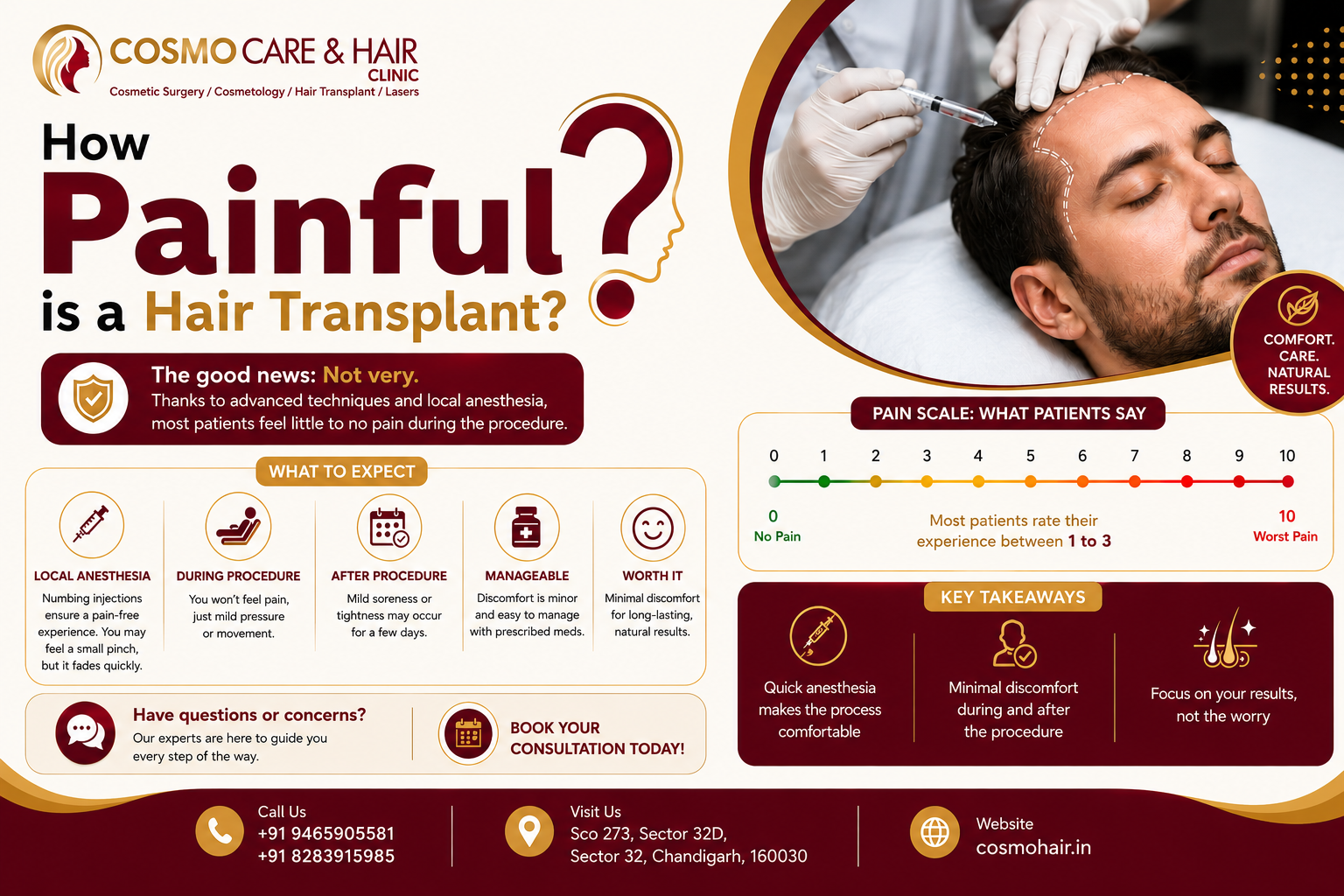
Hair loss affects both men and women and often lowers confidence and self-esteem. Many people who visit the Hair Transplant Clinic usually ask one common question before treatment: How painful is a hair transplant? Understanding the pain level, recovery process, and overall experience can help patients feel more comfortable before making a decision. People also compare the Hair Transplant Cost while planning treatment because the procedure depends on grafts, technology, and clinic expertise.
The good news is that modern hair transplant procedures are much less painful than many people expect. Advanced techniques and improved medical technology have made the treatment safer, smoother, and more comfortable for patients.
Understanding Pain During Hair Transplant Procedure
A hair transplant is a minimally invasive procedure where healthy hair follicles are moved from one area of the scalp to another. Most patients experience very little pain during the surgery because doctors use local anesthesia to numb the scalp.
The anesthesia injection may cause slight discomfort for a few seconds, similar to a small pinch. After that, the scalp becomes numb, and patients usually do not feel pain during the extraction or implantation process.
Many people remain awake during the entire treatment and comfortably watch videos, listen to music, or talk with the medical team while the procedure is being performed.
Hair Transplant Clinic Uses Modern Techniques
Modern clinics use advanced techniques such as FUE and FUT to improve patient comfort and recovery. At the Hair Transplant Clinic, specialists carefully plan the procedure to reduce discomfort and provide natural-looking results.
FUE, also known as Follicular Unit Extraction, is one of the most preferred methods today because it involves tiny extractions with minimal scarring. This method generally causes less pain during recovery compared to older techniques.
FUT, or Follicular Unit Transplantation, may involve slight tightness or soreness after surgery because it includes removing a strip of scalp from the donor area. However, doctors provide proper medications to manage discomfort effectively.
Advanced clinics also focus on hygiene, painless anesthesia techniques, and patient care to make the experience smoother.
How Painful Is Recovery After Hair Transplant?
Most patients feel mild soreness or sensitivity after the anesthesia wears off. However, the discomfort is usually manageable and temporary. The recovery phase is often easier than people imagine.
Patients may experience:
- Mild swelling around the forehead
- Slight redness in the treated area
- Small scabs around transplanted grafts
- Tightness or itching in the donor area
These symptoms are normal and usually improve within a few days. Doctors often prescribe pain relief medicines and antibiotics to ensure a comfortable recovery.
Many people return to office work within a few days after treatment, depending on the type of procedure performed.
Hair Transplant Cost and Treatment Comfort
Many people researching hair restoration also compare the Hair Transplant Cost before choosing a clinic. While affordable pricing is important, patients should also focus on safety, doctor experience, and treatment quality.
Clinics that use modern equipment and experienced specialists may provide better comfort during surgery and faster recovery after treatment. Lower-cost procedures performed without proper standards may increase the risk of pain, infection, or poor results.
The total cost usually depends on:
- Number of grafts required
- Technique used
- Experience of the surgeon
- Clinic technology and facilities
- Severity of hair loss
Choosing a clinic based on quality and patient care often gives better long-term satisfaction.
Why Some Patients Feel More Pain Than Others?
Pain tolerance is different for every person. Some patients may feel very little discomfort, while others may feel slight sensitivity during or after the procedure.
Several factors can affect the pain level, including:
- Individual pain tolerance
- Size of the transplant area
- Technique used during surgery
- Experience of the surgeon
- Post-treatment care routine
Patients who carefully follow medical instructions usually recover more comfortably and quickly.
Stress and anxiety can also increase sensitivity during treatment. This is why many clinics focus on patient counseling before surgery to help people feel relaxed and confident.
FUE Hair Transplant Offers Better Comfort
FUE hair transplant has become highly popular because of its minimally invasive nature. The procedure involves extracting individual hair follicles without large cuts or stitches.
Most patients prefer FUE because:
- It causes less discomfort
- Recovery is faster
- Scarring is minimal
- Healing time is shorter
- Patients can resume normal activities quickly
Many clinics now recommend FUE for patients who want natural results with less downtime and reduced pain during recovery.
Tips to Reduce Pain After Hair Transplant Surgery
Following proper aftercare instructions can greatly reduce discomfort and support healthy healing. Doctors usually provide detailed guidelines for the first few days after surgery.
Some helpful recovery tips include:
- Avoid touching or scratching the scalp
- Sleep with your head elevated
- Take medicines on time
- Avoid smoking and alcohol
- Stay hydrated and eat healthy foods
- Protect the scalp from direct sunlight
Patients should also avoid heavy exercise for a few days because sweating can irritate the treated area.
Most discomfort improves significantly within the first week after surgery.
Hair Transplant Results Improve Naturally Over Time
Hair transplant results do not appear immediately because transplanted hair follicles need time to heal and grow naturally. Patients may notice temporary shedding during the first few weeks, which is completely normal.
New hair growth usually starts within three to four months, while full results may take up to one year.
People who maintain a healthy lifestyle and follow doctor recommendations often achieve better hair density and long-lasting results.
Mental Fear Is Often Bigger Than Physical Pain
Many patients feel nervous before their first hair transplant because they imagine the surgery will be extremely painful. In reality, most people later say the procedure was much easier than expected.
Modern anesthesia, skilled surgeons, and improved techniques have significantly reduced pain levels in hair restoration treatments.
The emotional benefit after successful hair growth also helps patients feel more confident and satisfied with the decision.
Consulting an experienced clinic helps patients understand the process clearly and removes unnecessary fear before surgery.
Conclusion
A hair transplant is generally not considered a highly painful procedure. Most patients experience only mild discomfort during anesthesia and temporary soreness after surgery. Modern techniques such as FUE have made hair transplantation safer, smoother, and more comfortable than before.
People searching for the Best Hair Transplant Clinic should focus on experienced specialists, advanced technology, and patient safety instead of choosing treatment only based on Hair Transplant Cost.
Frequently Asked Questions
Is hair transplant surgery very painful?
No, it is usually not very painful because local anesthesia is used to numb the scalp during the procedure.
How long does pain last after hair transplant?
Most patients experience mild discomfort for a few days. The soreness and swelling usually improve within one week.
Which hair transplant method is less painful?
FUE hair transplant is generally considered less painful because it does not involve large cuts or stitches.
Can I sleep normally after a hair transplant?
Doctors usually recommend sleeping with your head elevated for a few days to reduce swelling and protect grafts.
Is hair transplant recovery difficult?
Recovery is usually simple if patients follow proper aftercare instructions, take medicines on time, and avoid heavy physical activity.