
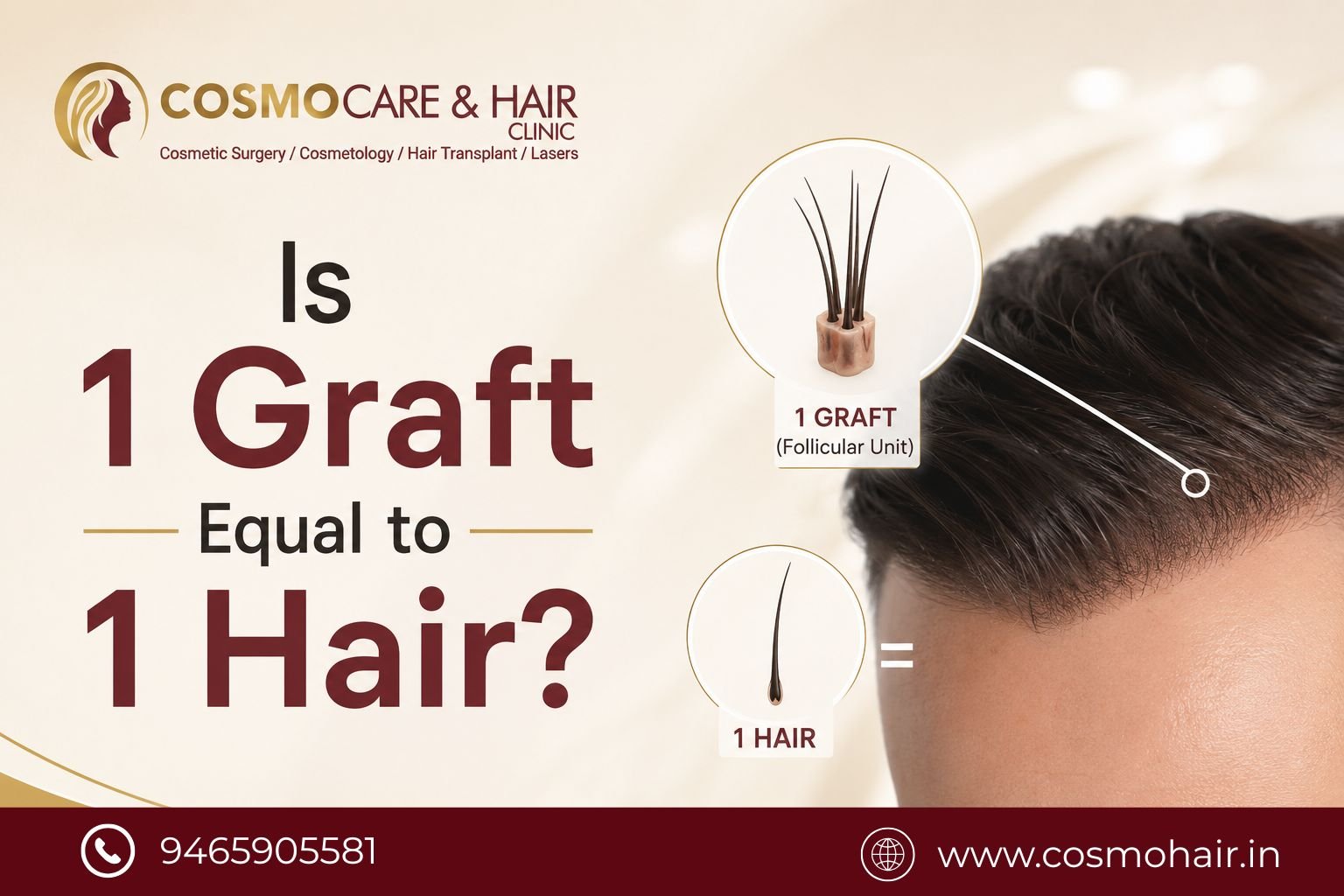
If you are considering a hair transplant, one of the most common questions you may have is: Is 1 graft equal to 1 hair? The simple answer is no. Many people believe that one graft means one hair, but that is not how hair transplantation works. Understanding the difference between grafts and hairs can help you make informed decisions about your treatment and set realistic expectations for your results.
In modern hair transplant procedures, surgeons work with grafts, also known as follicular units. These grafts contain one or more hair follicles and are carefully transplanted from the donor area to the areas experiencing hair loss. Knowing how grafts are counted can help you better understand hair transplant planning, coverage, and density.
Understanding What a Hair Graft Actually Contains
A hair graft is a naturally occurring group of hair follicles taken from the donor area, usually the back or sides of the scalp. Hair does not grow individually across the scalp. Instead, it grows in small groups known as follicular units.
Each graft can contain:
- 1 hair
- 2 hairs
- 3 hairs
- 4 hairs
In some cases, a graft may contain even more hairs, but this is less common. Because of this natural grouping, one graft is not equal to one hair. Most hair grafts contain between 2 and 3 hairs, depending on the natural density and growth pattern of the donor area.
Why One Graft Is Not the Same as One Hair?
The confusion often comes from the way hair transplant procedures are discussed. Clinics typically quote the number of grafts needed rather than the total number of hairs being transplanted.
For example:
- 1,000 grafts may contain approximately 2,000 to 3,000 hairs.
- 2,000 grafts may contain approximately 4,000 to 6,000 hairs.
- 3,000 grafts may contain approximately 6,000 to 9,000 hairs.
The exact number depends on how many hairs are present in each graft. This is why two patients receiving the same number of grafts may achieve different levels of density and coverage.
How Hair Graft Distribution Creates Natural Results?
A successful hair transplant is not only about the number of grafts used. It is also about where those grafts are placed.
Single-hair grafts are generally used along the front hairline to create a soft and natural appearance. Multi-hair grafts containing two, three, or four hairs are placed behind the hairline and in the crown area to improve density and coverage.
This strategic placement helps surgeons recreate a natural hair growth pattern. A skilled surgeon understands how to use different graft types to achieve the most realistic outcome possible.
Factors That Affect Hair Count Per Graft
Not everyone has the same graft composition. Several factors influence how many hairs each graft contains.
Hair Genetics and Natural Density
Some individuals naturally have a higher number of hairs per follicular unit. This means they may achieve better coverage with fewer grafts.
Hair Thickness
People with thicker hair often appear to have greater density because each hair strand covers more scalp area.
Donor Area Quality
The health and density of the donor area significantly affect the number and quality of grafts available for transplantation.
Hair Texture
Curly and wavy hair can create the appearance of fuller coverage compared to straight hair, even when the graft count is the same.
Why Graft Count Matters More Than Hair Count?
While the total number of hairs is important, surgeons primarily focus on graft count because grafts are the units that are extracted and implanted during the procedure.
The quality of grafts, their survival rate, and proper placement often have a greater impact on results than simply counting individual hairs.
A well-planned procedure using fewer high-quality grafts can often produce better results than a procedure that focuses only on maximizing graft numbers.
How Many Grafts Are Usually Needed for Hair Restoration?
The number of grafts required varies based on the extent of hair loss and the desired level of coverage.
General estimates include:
- Mild hair loss: 1,000 to 1,500 grafts
- Moderate hair loss: 2,000 to 3,000 grafts
- Advanced hair loss: 3,500 to 5,000+ grafts
Every patient is different, which is why a personalized consultation is essential before planning treatment.
Common Misunderstandings About Hair Grafts and Hair Count
Many patients focus only on graft numbers when comparing clinics. However, this can be misleading.
Some important points to remember include:
- A higher number of grafts does not automatically guarantee a better hair transplant outcome.
- Hair density depends on graft quality and placement.
- Hair thickness and texture influence visual coverage.
- Donor area preservation is important for future procedures.
- A natural-looking hairline often requires careful use of single-hair grafts.
Understanding these factors helps patients evaluate treatment options more accurately.
Choosing the Right Hair Transplant Clinic
When researching a hair transplant clinic, focus on more than just graft numbers. Look for experienced surgeons, advanced technology, natural-looking results, and a personalized treatment approach.
At Cosmo Care & Hair Clinic, every hair restoration plan is designed according to the patient’s unique hair characteristics, degree of hair loss, and long-term goals. The focus is on creating natural density while preserving donor hair for future needs.
A detailed consultation can help determine how many grafts you require and what level of coverage you can realistically expect.
Final Thoughts
So, is 1 graft equal to 1 hair? The answer is clearly no. A graft is a follicular unit that can contain multiple hairs, usually between one and four. This distinction is important because graft count and hair count are not the same thing.
When evaluating a hair transplant procedure, focus on the overall treatment plan, graft quality, donor area health, and surgeon expertise rather than just the number of grafts being offered. With proper planning and expert execution, clinics such as Cosmo Care & Hair Clinic can help patients achieve natural and long-lasting hair restoration results.
Frequently Asked Questions
Is one graft always equal to one hair?
No. A single graft usually contains between one and four hairs. The average graft contains approximately two to three hairs.
How many hairs are in 2,000 grafts?
Depending on the graft composition, 2,000 grafts may contain approximately 4,000 to 6,000 individual hairs.
Why do clinics count grafts instead of hairs?
Grafts are the actual units extracted and transplanted during surgery. Counting grafts provides a more accurate way to plan and perform the procedure.
Can two patients with the same graft count get different results?
Yes. Hair thickness, texture, donor quality, graft composition, and placement techniques all influence the final outcome.
What is more important, hair count or graft quality?
Graft quality is generally more important. Healthy grafts placed correctly can create better density and more natural-looking results than simply focusing on a high hair count.