
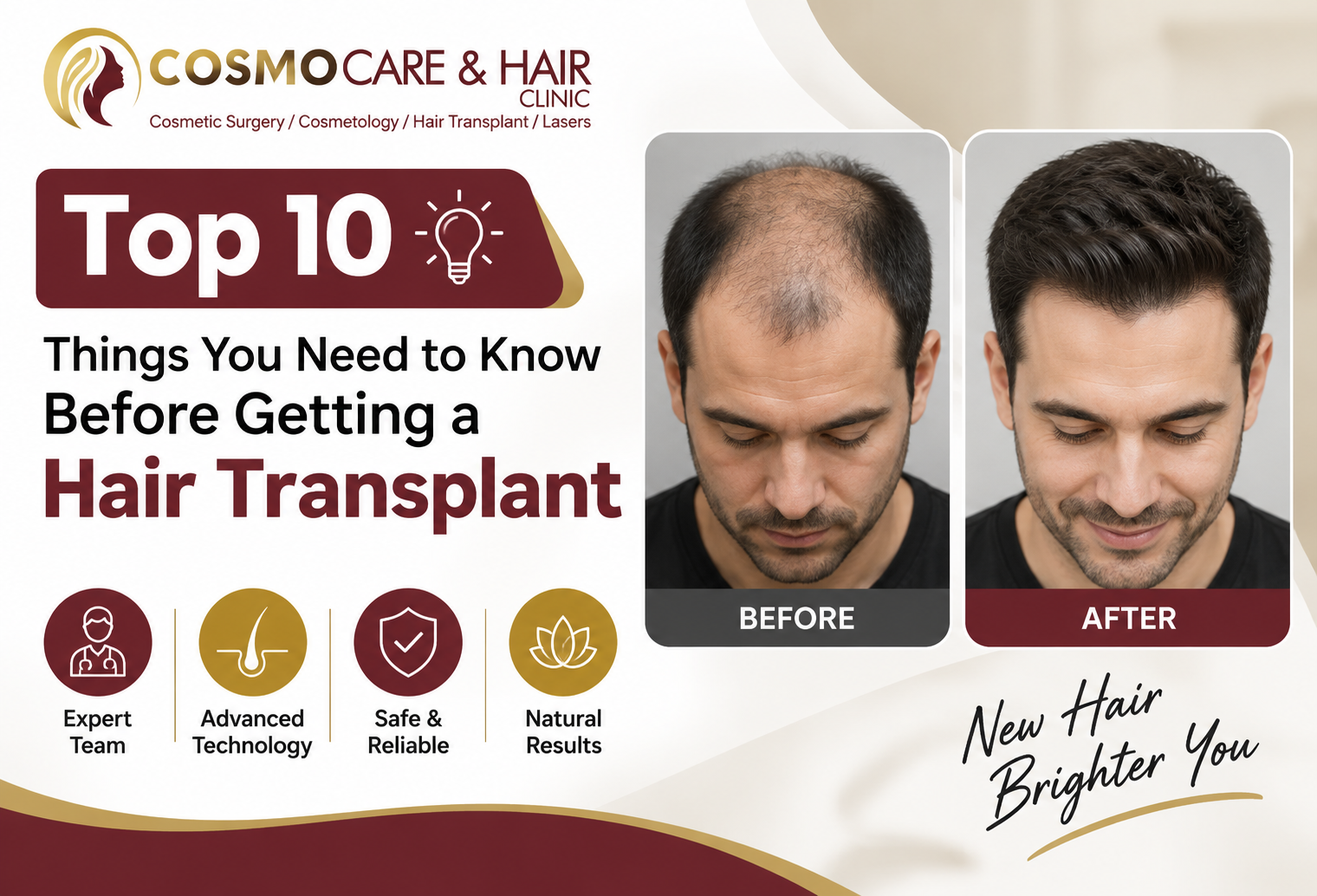
Hair loss can affect your confidence and make you look for a lasting solution. A hair transplant is a popular treatment for people who want to restore thinning areas and improve their hairline. However, getting a hair transplant is a major decision that needs proper planning. Before choosing a clinic or booking your procedure, it is important to understand how hair transplantation works, who is suitable, what results to expect, and how much care is needed after surgery. This guide covers the top 10 things you should know before getting a hair transplant.
1. Understand How Hair Transplant Surgery Works
A hair transplant is a procedure in which healthy hair follicles are moved from one part of your scalp to areas affected by hair loss. The donor area is usually the back or sides of the head because these hairs are often more resistant to pattern hair loss.
The surgeon carefully extracts hair follicles and places them into thinning or bald areas. The goal is to create a natural-looking hairline and improve hair density. Hair transplantation is generally performed under local anaesthesia, so you remain awake while the treatment area is numbed.
Two common techniques are Follicular Unit Extraction (FUE) and Follicular Unit Transplantation (FUT). FUE removes individual follicular units, while FUT removes a strip of scalp from which follicular units are prepared. Your surgeon can explain which method is suitable for your hair loss, donor supply, and goals.
2. Check If You Are a Suitable Hair Transplant Candidate
Not everyone with hair loss is an ideal candidate for a hair transplant. Your suitability depends on several factors, including the cause of hair loss, the condition of your scalp, the availability of donor hair, and your overall health.
People with pattern hair loss may benefit from transplantation if they have enough healthy donor hair. However, hair loss caused by certain medical conditions, active scalp problems, or unstable hair loss may need further evaluation before surgery.
A qualified hair transplant surgeon should examine your scalp and review your medical history. In some cases, blood tests or other investigations may be needed to understand the cause of hair loss. A proper assessment helps determine whether surgery is appropriate or whether another treatment should be considered first.
3. Know the Difference Between FUE and FUT Methods
Understanding the available hair transplant techniques can help you make a more informed decision. FUE and FUT are established methods, but each has different benefits and limitations.
With FUE, individual hair follicles are extracted from the donor area using small instruments. The follicles are then implanted into the recipient area. This method does not require removing a strip of scalp, although it can leave many tiny scars that may be difficult to see.
FUT involves removing a strip of scalp from the donor area and separating it into individual grafts. It can be useful for selected patients who need a larger number of grafts, but it leaves a linear scar. The best technique depends on your scalp, hair characteristics, donor area, and surgeon’s assessment rather than marketing claims alone.
4. Choose an Experienced Hair Transplant Surgeon
The skill and experience of your surgeon can make a significant difference in your treatment experience and results. Hair transplantation is not simply about moving hair from one area to another. It requires careful planning, knowledge of hair growth patterns, and attention to the natural direction of hair.
Before selecting a surgeon, check their medical qualifications, relevant training, experience with hair restoration, and the type of procedures they perform. Ask whether the surgeon personally evaluates patients and performs the important surgical steps.
You should also ask to see genuine before-and-after photographs of patients with similar hair loss. These photographs can help you understand the surgeon’s approach, although they cannot guarantee your own results.
5. Set Realistic Expectations for Hair Transplant Results
One of the most important things to know before a hair transplant is that results take time. A transplant does not produce a full head of hair immediately after surgery.
The transplanted hair commonly sheds during the early healing period. This is often called shock loss or shedding of transplanted hairs, and it can be a normal part of the growth cycle. New hair growth usually begins gradually over the following months.
Many patients start noticing visible improvement around 3 to 6 months, while more substantial results may develop between 9 and 12 months. The final outcome can take longer, particularly when the crown is treated. Results vary according to graft survival, hair characteristics, healing, and the progression of existing hair loss.
6. Understand Hair Transplant Cost and Graft Requirements
Hair transplant cost is an important part of planning your treatment. However, the price should not be the only factor when choosing a clinic.
The total cost may depend on the number of grafts required, the transplant technique, the surgeon’s experience, the clinic’s facilities, and the level of care provided. A patient with a small receding hairline may need fewer grafts than someone with extensive thinning.
During your consultation, ask for a clear estimate that explains what is included. This may cover consultation, surgery, medicines, follow-up visits, and any additional services. Avoid choosing a clinic only because it offers the lowest price. Quality of care, safety, and realistic treatment planning should remain important priorities.
7. Prepare Properly Before Your Hair Transplant Surgery
Good preparation can help make your procedure safer and your recovery more comfortable. Your surgeon should provide specific instructions based on your health and the planned treatment.
Tell your doctor about any medicines, supplements, allergies, and existing medical conditions. Do not stop prescribed medicines on your own. Your surgeon will advise you if any medicines or supplements need to be adjusted before surgery.
It is also helpful to arrange transportation home, keep your schedule free for the early recovery period, and prepare a comfortable place to rest. Follow the clinic’s instructions about washing your hair, smoking, alcohol, and eating before the procedure.
8. Learn About Recovery and Hair Transplant Aftercare
Recovery after a hair transplant requires patience and proper aftercare. You may experience mild swelling, redness, tenderness, or small scabs in the treated areas. These effects vary from person to person and usually improve during healing.
Your clinic will explain how to wash your scalp, sleep comfortably, protect the transplanted area, and avoid activities that could disturb the grafts. You may need to avoid strenuous exercise and direct pressure on the scalp for a period recommended by your surgeon.
Do not scratch or pick scabs, and do not apply unapproved products to the treated area. Follow-up appointments are important because your surgeon can monitor healing and address any concerns. Contact your clinic if you notice unusual pain, increasing redness, fever, or other signs of possible complications.
9. Know the Risks and Possible Hair Transplant Complications
Like any surgical procedure, hair transplantation has potential risks. Understanding these risks helps you make an informed decision.
Possible complications include infection, bleeding, swelling, temporary numbness, scarring, poor graft growth, and an unnatural-looking hairline. Some patients may also experience temporary or ongoing shock loss. The risk of complications can depend on the technique, the surgeon’s skill, and individual healing.
A reputable clinic should explain both the benefits and limitations of treatment. Ask about how complications are prevented, what happens if a graft does not grow as expected, and how follow-up care is managed.
10. Plan for Long-Term Hair Loss and Maintenance
A hair transplant can improve areas of permanent hair loss, but it does not stop the underlying process of pattern hair loss. Your existing, non-transplanted hair may continue to thin over time.
This is why long-term planning is important. Depending on your condition, a dermatologist or hair transplant surgeon may recommend treatments such as minoxidil or finasteride. These medicines are not suitable for everyone and should be discussed with a qualified healthcare professional.
Your surgeon should also consider your future hair loss when designing your hairline. A conservative, natural-looking plan may help preserve your appearance as you age. At Cosmo Care & Hair Clinic, patients can discuss their hair loss concerns, treatment goals, and suitable hair restoration options with a professional team.
Final Thoughts on Choosing the Right Hair Transplant Clinic
A hair transplant can be a valuable option for people experiencing pattern hair loss, but the decision should be based on proper assessment and realistic expectations. Before surgery, understand the procedure, compare suitable techniques, choose a qualified surgeon, review the cost, and learn about recovery and long-term maintenance.
The right clinic should focus on patient safety, natural-looking results, and honest advice rather than promising guaranteed outcomes. Taking time to research your options can help you feel more confident about your decision and prepare for the hair restoration journey.
Frequently Asked Questions About Hair Transplant Surgery
1. Is a hair transplant a permanent solution for hair loss?
A hair transplant can provide long-lasting growth from transplanted follicles, especially when they are resistant to pattern hair loss. However, existing non-transplanted hair may continue to thin. Long-term treatment and monitoring may be recommended.
2. How long does it take to see hair transplant results?
Visible hair growth often begins around 3 to 6 months after surgery. More noticeable results may develop between 9 and 12 months, although the final outcome can take longer. Growth varies between patients.
3. Is a hair transplant painful?
Hair transplantation is usually performed under local anaesthesia, which numbs the scalp during surgery. You may experience mild discomfort, swelling, or tenderness after the procedure. Your surgeon will explain how to manage recovery.
4. How many grafts are needed for a hair transplant?
The number of grafts depends on your hair loss pattern, the size of the thinning area, donor hair availability, and your desired density. A consultation is necessary to estimate the number of grafts required.
5. Can hair transplant surgery fail?
Hair transplantation does not guarantee complete growth of every graft. Poor growth, scarring, infection, and an unnatural appearance are possible risks. Choosing a qualified surgeon and following aftercare instructions can help support a safe treatment process.